Calligraphy Student Spotlight: Ale Amaya
In thisection of my educational website I interview professional calligraphers who make a living primarily from their work, as well as calligraphy students at different stages of their learning journey, as I’m very interested in both points of view.
My next Calligraphy Student Spotlight is with a dear student of mine called Ale Amaya who has a deep love for Copperplate calligraphy both as an analogue practice and digitally using Procreate.
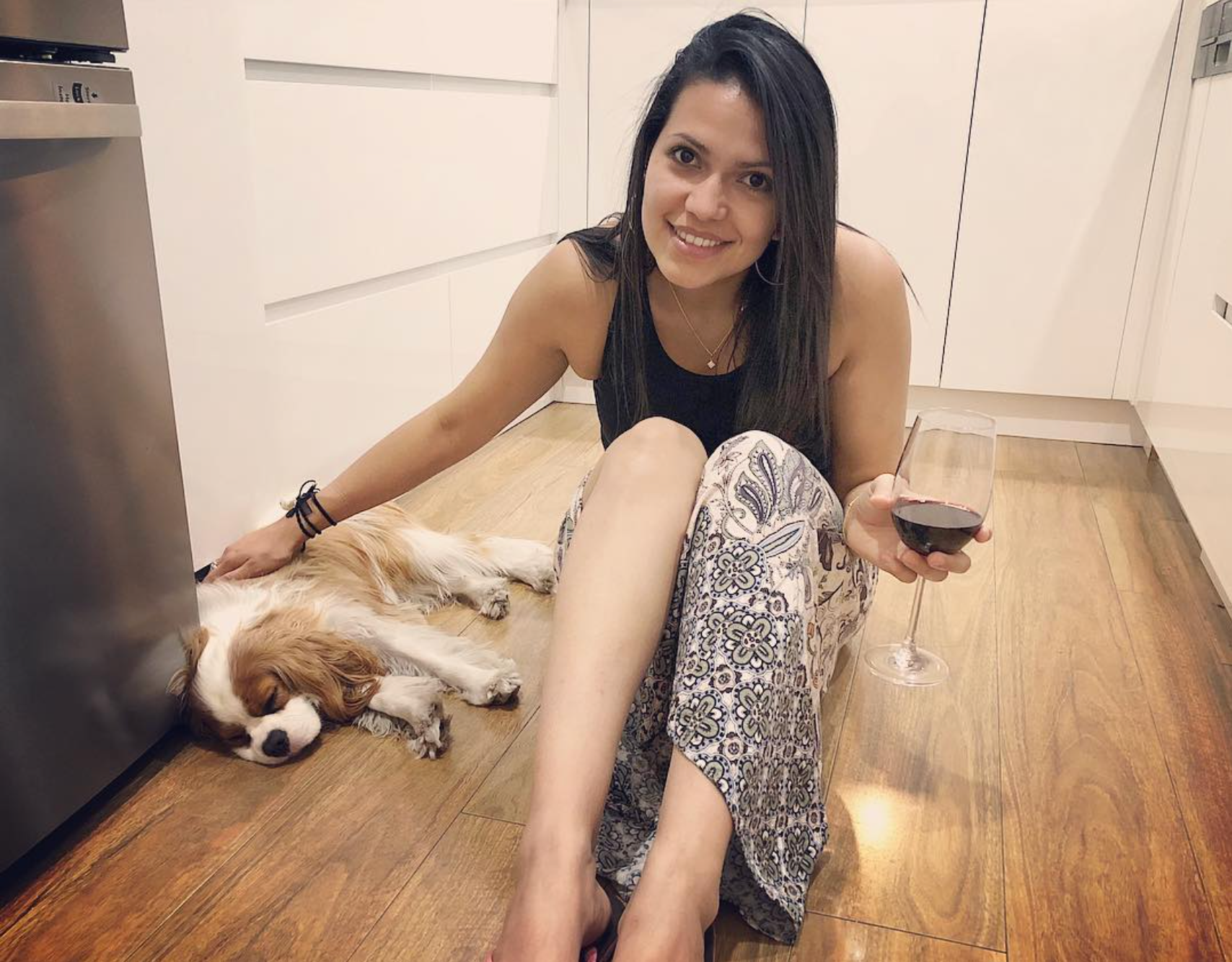
Profile photo: Ale Amaya
1. CALLIGRAPHY STUDENT PROFILE
What is your name, age, current occupation and location?
Ale, 39, account manager for a cyber security company, Melbourne (Australia).
How long have you been practicing calligraphy?
On and off since 2019.
How did you first discover calligraphy, and what drew you to it initially?
I’ve always been drawn to letterforms, even before I knew calligraphy existed. At school I was the one who made all the posters and signs for events, and I often helped friends by writing letters or anything that needed to look special. I also went to a school run by nuns, so I learned cursive from a young age. As I grew older, I started experimenting with my handwriting on my own, changing styles, proportions, and shapes just because I enjoyed it.
Years later, I discovered modern lettering on Instagram and realised there was a whole world around decorative writing. I took an introductory course, which sparked my interest, and while searching for more structured learning I found Maria. She encouraged me to explore several scripts rather than choosing just one, and that approach really opened the door for me. From there I completed her classes, repeated them, and even attended a calligraphy retreat. That’s when I truly fell in love with calligraphy and realised how much depth there was to it.
Do you consider yourself a beginner, intermediate or advanced calligraphy student?
I would say my level depends on the script. In styles I practise regularly, such as Copperplate, modern calligraphy, and Carolingian, I consider myself somewhere between intermediate and advanced. Copperplate in particular is the script I feel most comfortable with, although I’m still developing areas like flourishing.
In contrast, with scripts I practise less often, such as Roman capitals, or Blackletter I would describe myself as a beginner, mainly because it isn’t a style I naturally gravitate toward. Overall, I see myself as an intermediate calligrapher who is progressing toward an advanced level in the scripts I focus on most.
Have you taken any in-person or online courses? If so, do you have a preference?
Yes, I’ve taken both in-person and online courses. I began with an in-person modern lettering class, and later completed Maria’s full program covering Copperplate, Roman capitals, Blackletter, Italian hand, and Carolingian. I completed her program twice, attended one of her calligraphy retreats, and have continued joining her courses both online and in person whenever she offers them.
Maria encouraged me to learn from other teachers as well, and I followed her advice. I studied with a few international teachers online, particularly during COVID, which gave me valuable exposure to different approaches and techniques. That experience helped me broaden my perspective.
However, I always find myself coming back to Maria’s classes. I feel that I learn the most from her teaching style, her depth of knowledge, and the way she explains structure and technique across multiple scripts. I also value that she teaches several different styles, which allows me to experiment, combine influences, and gradually develop my own voice rather than simply copying a model.
While I appreciate the flexibility of online learning and the opportunity to study with teachers around the world, I personally prefer in-person classes. Receiving feedback in real time helps me refine my work more effectively and stay fully engaged.
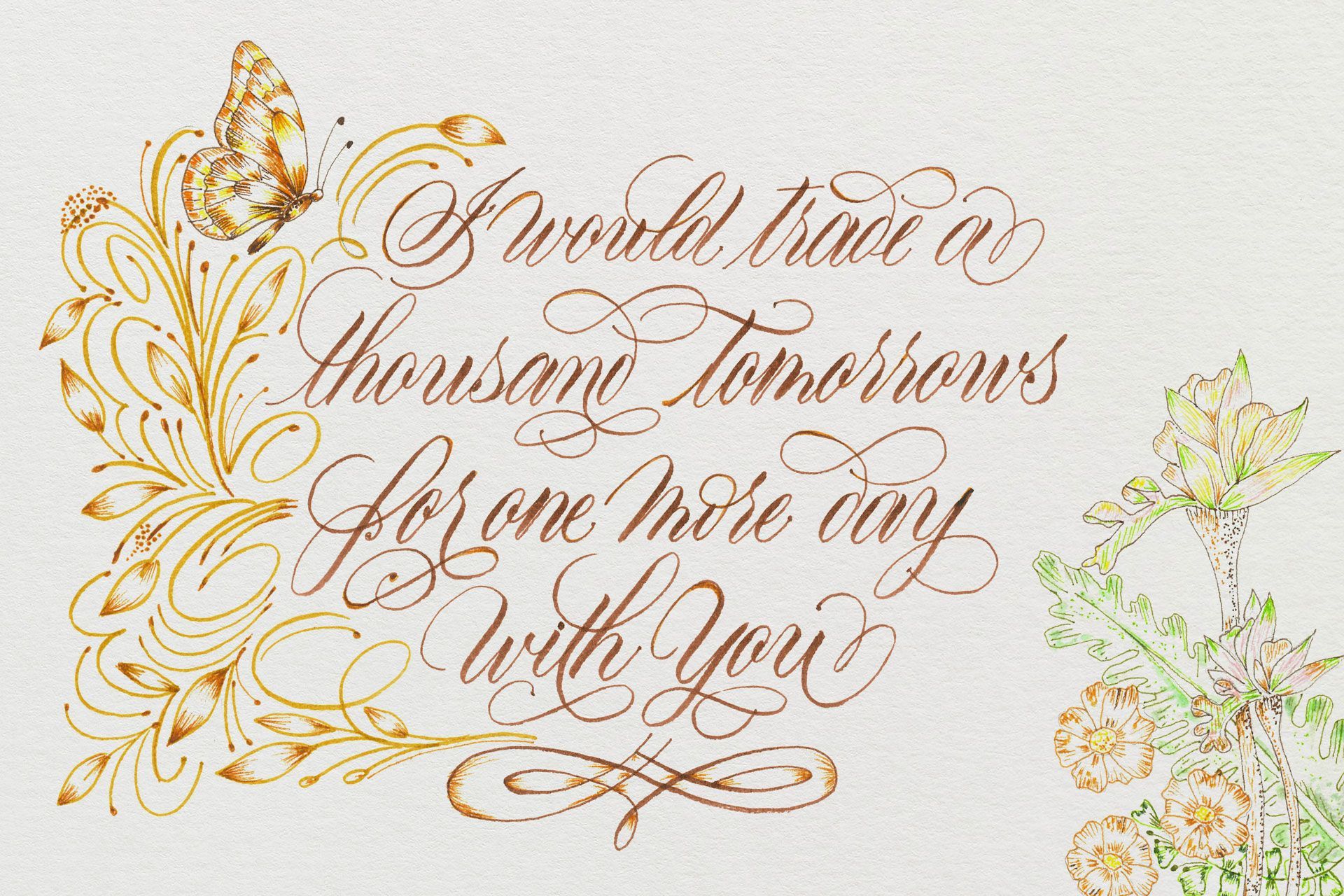
Image credit: A4 greeting card using a Pentel Touch brush pen by Ale Amaya.
Who or what has had the greatest influence on your development as a calligraphy student?
Maria Montes has had the greatest influence on my development. She’s the teacher I keep coming back to because of her depth of knowledge and her approach to teaching.
In many calligraphy courses, the focus is on strict precision, where every letterform must follow exact rules. What I value about Maria is that she teaches those rules thoroughly and helps you understand typography at a deeper level, but she also encourages you to develop your own voice once you understand the foundations.
That balance between discipline and creative freedom has shaped the way I approach calligraphy more than anything else. My goal is no longer to make my Copperplate look perfect or identical to a model, but to make it recognisable as mine. Learning the rules so I can interpret them in my own way has become central to my practice.
Do you have any recommendation for students wanting to start their calligraphy journey?
Yes. My biggest recommendation is simply to start. It’s never too late, and if you feel drawn to calligraphy, it’s worth trying. Even if you’re unsure, giving it a go is the only way to know whether it’s for you. If it is, you might just fall in love with it.
I would also say to be patient. Calligraphy takes time to develop, much like training a muscle. You’re not only training your hand, but also your eye, your sense of proportion, and your understanding of the rules. Progress doesn’t happen overnight, and that’s part of the beauty of it.
I strongly recommend taking a course if you can, especially at the beginning. There is plenty of information online, but having a teacher who can give feedback makes a huge difference. It’s similar to learning any physical skill, guidance helps you build the right foundations and avoid habits that slow you down later.
Finally, experiment. Try different teachers, scripts, tools, nibs, papers, and surfaces. Exploring different approaches helps you discover what resonates with you and keeps the process enjoyable.
Which calligraphy scripts or styles do you feel most connected to, and why?
I feel most connected to Copperplate. I love its elegance, flow, and structure, and I enjoy that it allows space to develop a personal interpretation over time. It’s a script that feels both disciplined and expressive, and I find it very satisfying to practise.
I’m also very drawn to Modern Carolingian. It feels playful, distinctive, and visually different from many other scripts I’ve seen. I enjoy experimenting within it and exploring its rhythm and shapes.
I also really enjoy Italic hand, as it shares structural similarities with Carolingian and uses the same tools, which makes it feel familiar and comfortable to work with.
Overall, I’m most inspired by scripts that combine beauty, rhythm, and the possibility of developing a personal connection to them.
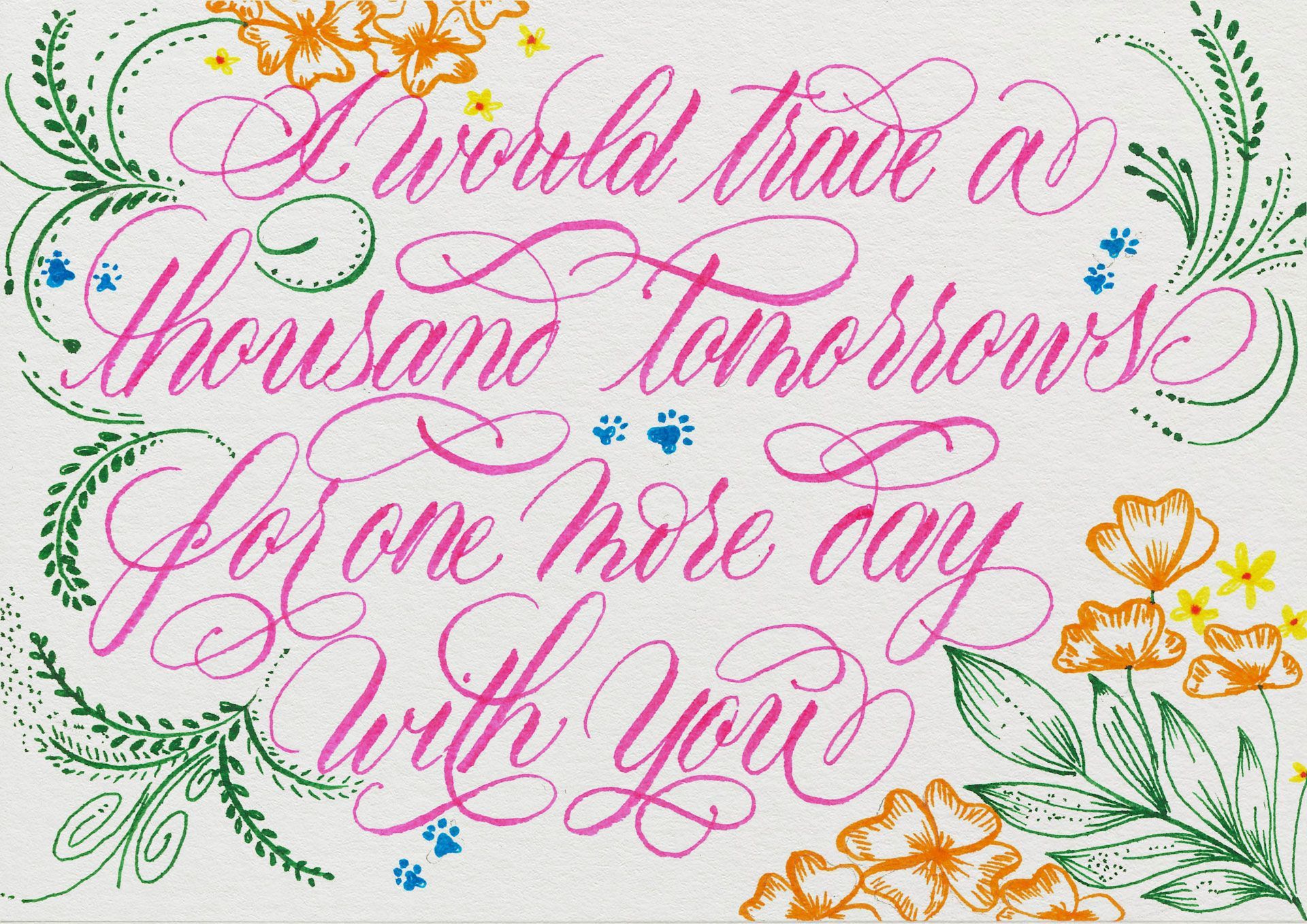
Image credit: A5 greeting card using a Pentel Touch brush pen by Ale Amaya.
Is your calligraphy practice 100% analogue? Do you use Procreate or vector-based software at all?
When I first started calligraphy, I worked primarily with traditional tools such as nibs, ink, pentel brush pens and paper. I still practise Copperplate this way, as I think it’s important to maintain control and consistency with real materials, especially for pieces I create for others, or for envelopes.
Over time, however, I’ve come to use my iPad and Procreate for much of my practice. I enjoy the flexibility it offers, as I can practise anywhere without the mess or setup required for ink and paper. I’ve also created a custom brush in Procreate for Carolingian, which allows me to explore that script more freely.
So while I still value traditional tools and continue to practise Copperplate on paper, much of my daily practice, especially for experimentation and other scripts, happens digitally on my iPad.
Do you see calligraphy more as a hobby, a future job, a possible career or a vocation—or a combination?
At the moment, calligraphy is both a hobby and a potential future path for me. It’s something I genuinely love and enjoy doing, and it brings me a lot of satisfaction creatively.
I can absolutely see it becoming more than a hobby in the future, whether as a side business or eventually a career shift. What I’m still working through is how to build that transition in a sustainable way alongside my current corporate role.
For now, I see calligraphy as a combination of passion, creative outlet, and long-term possibility. It’s something I’m committed to continuing and developing, wherever it may lead.
Have you done any client work? If so, how did you find the experience? Would you like to do it again? If not, would you like to do it at all?
I have done a small amount of calligraphy work so far, mainly through personal requests. This has included envelope addressing for a christening, a custom birthday piece, and a calligraphed Bible verse commissioned as a gift.
These experiences were valuable learning opportunities. For example, working on envelopes taught me how important paper choice and ink compatibility are, and how much preparation goes into ensuring materials work well together.
I also created and delivered a private modern lettering session as a gift for a Bat Mitzvah, designing my own practice sheets and alphabet. While it was a positive experience, it helped me realise that my main interest lies less in teaching and more in creating pieces or designs that can exist beyond a single moment or event.
I feel most fulfilled when producing work that lasts, such as artwork, printed pieces, or designs that can be reproduced and shared more widely. That direction feels most aligned with how I’d like to develop my calligraphy practice in the future.
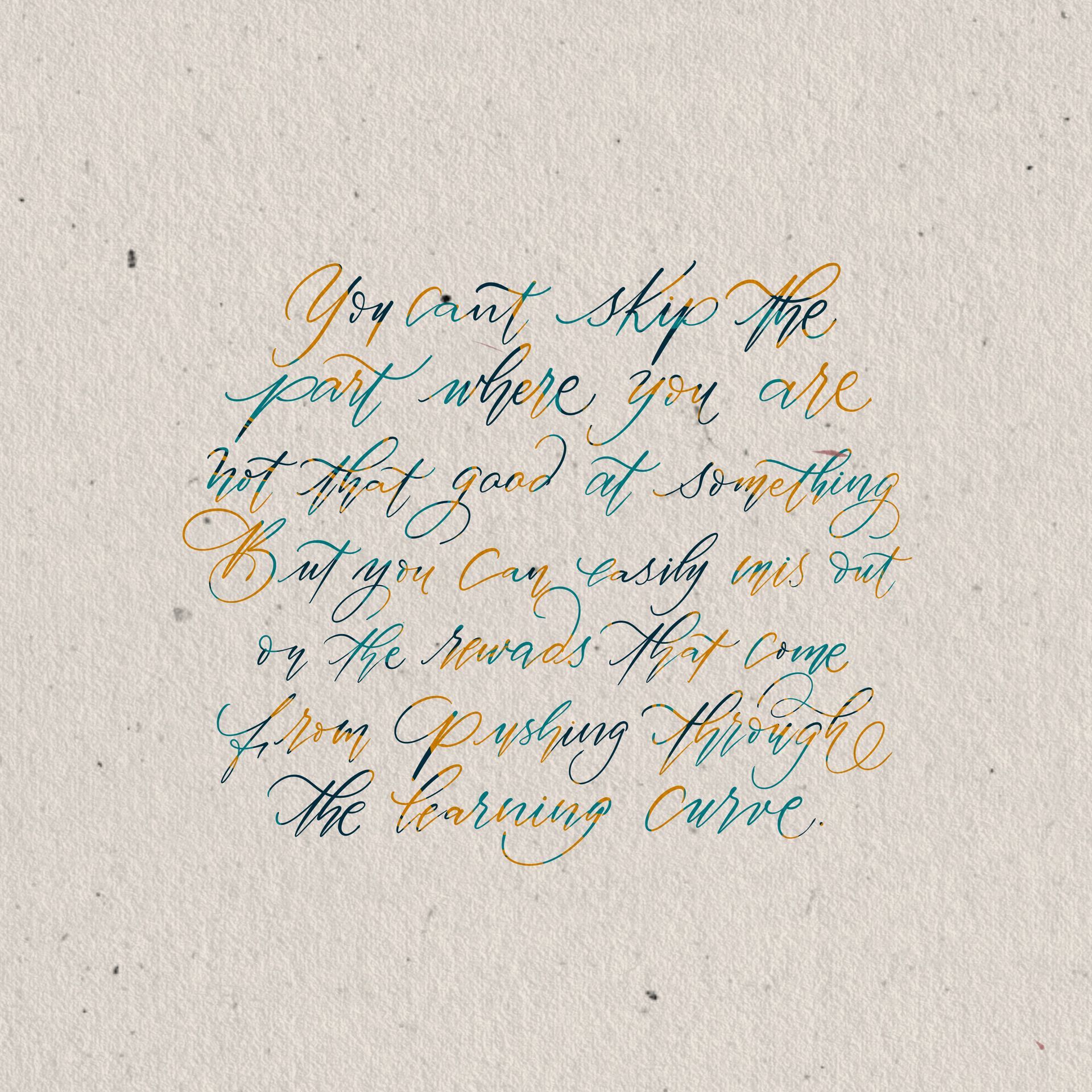
Image credit: Personal interpretation of Copperplate calligraphy on Procreate by Ale Amaya.
2. Consolidating Fundamentals
Which foundational calligraphy skill do you feel most confident in now, and which still needs reinforcement?
I think I now have all the foundational skills, but what I need most is more practice. I believe creating more pieces on paper would be especially helpful, as there is much less room for error. Practising in this way will help me build greater confidence, consistency, and precision in my work.
What technical habit has been hardest to unlearn as you progressed?
I think the hardest habit to unlearn has been the need to make every letter look exactly like the model. Early on, I was very focused on accuracy and trying to reproduce each script as perfectly as possible, which is an important part of learning the foundations.
As I've progressed, I've realised that once you understand the rules, it's equally important to let your own style emerge. That shift from copying to interpreting has probably been the biggest change in my approach. I still value precision and structure, but I'm becoming more comfortable making choices that feel authentic to me while respecting the underlying principles of the script.
How has your understanding of basic letter structure changed since you began?
My understanding of letter structure has changed from focusing on individual letters and words to thinking about the composition as a whole.
One of the biggest changes has been learning to train my eye. In the beginning, I would mainly notice whether a single letter looked right. Now, I naturally look at an entire piece and can recognise when the spacing feels uneven, when a stroke could be longer or shorter, or when the overall rhythm isn't quite working.
I've also become much more aware of balance. For example, if I add a flourish at the beginning of a sentence, I now think about how that visual weight will be carried throughout the piece and balanced at the end. Rather than seeing flourishes as decorative additions, I see them as part of the overall composition, helping to create harmony and flow.
Understanding the structure and the rules has also given me the confidence to know when I can move beyond them. Once you understand why the rules exist, you can make intentional choices about when to bend or break them in a way that still feels balanced and harmonious. For me, that's an important part of developing my own style.
What recently “clicked” for you in your practice?
As I've practised more, I've started to recognise my own voice in my work. My letterforms tend to be rounder, bolder, and a little more expressive, and I've realised that's something to embrace rather than try to eliminate.
My current calligraphy course has also reinforced which scripts I genuinely connect with. Spending time exploring different styles has confirmed that I'm naturally drawn to certain scripts and enjoy working with them much more than others. That reassurance has given me more confidence about the direction I want to take my practice.
Another important realisation has been that calligraphy is very much like training a muscle. When I don't practise for a while, I notice that my control and confidence aren't quite the same. But I've also realised that I never start from zero. Once I pick up my pens, nibs or ipad again, the skills return surprisingly quickly, and I can keep building from where I left off. That has taught me that consistent practice is the key to improving, and that every hour I spend practising is an investment in future progress.
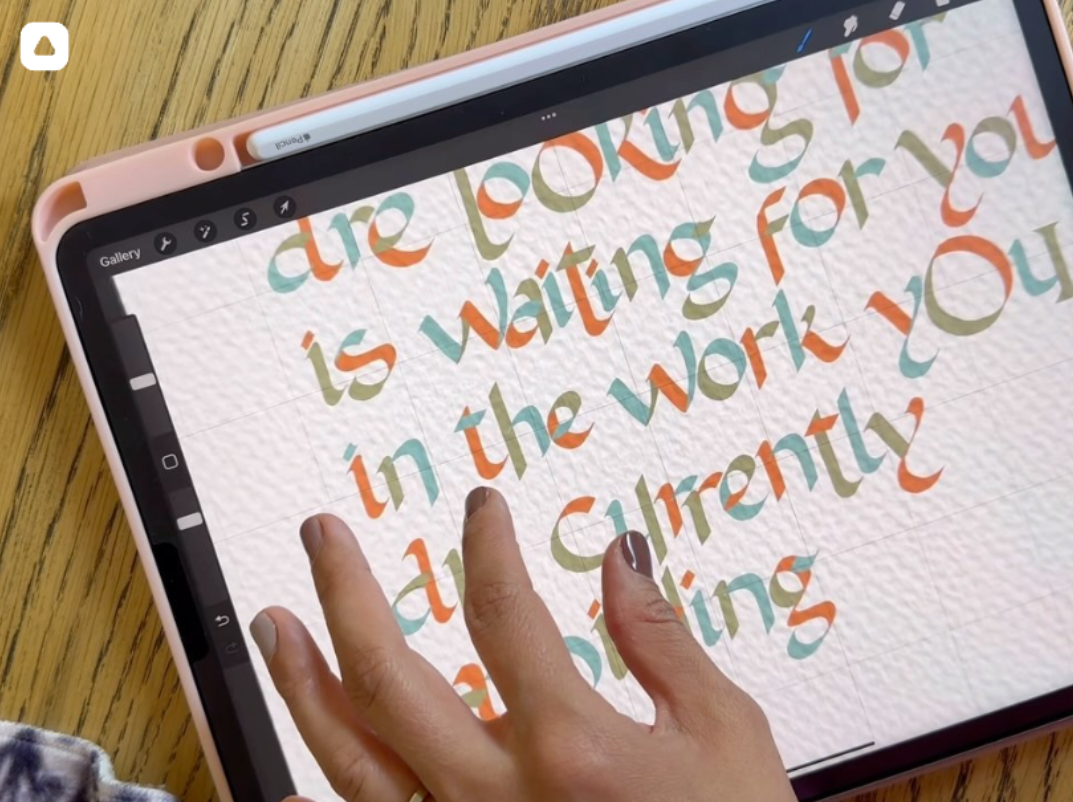
Image description: Modern Carolingian personal interpretation on Procreate by Ale Amaya.
3. PRACTICE & CONSISTENCY
How do you currently structure your practice sessions?
Because I work full time in a demanding corporate role, my practice routine isn't always consistent.
There are periods when I can dedicate several hours a week to calligraphy, and others when work and personal commitments leave me with much less time.
I've found that setting a goal of practising for just 15 minutes a day works well for me. It's a realistic commitment that helps me maintain momentum, even during busy periods. If I have more time, I'll often practise for an hour or longer, usually early in the morning, but I don't put pressure on myself to do that every day.
The important thing for me is to keep practising regularly, even if it's only for a short time. I've learned that consistency, however small, is far more valuable than waiting for the perfect opportunity to practise.
What helps you stay consistent when progress feels slow or uneven?
Over the years, I've learned that calligraphy takes time, and there are no shortcuts. What keeps me consistent is knowing that every time I practise, I improve, even if the progress isn't immediately obvious. Looking back at how far I've come reminds me that regular practice is the key to getting better.
How do you decide what to focus on when you sit down to practice calligraphy?
It depends on how much time I have. If I have a longer practice session, I usually start with a specific piece or quote in mind. I'll choose the script I want to practise, sketch out a composition, and spend several sessions refining that piece. I enjoy practising in context rather than focusing only on individual letters or words, and I do most of this work on my iPad.
If I only have 15 minutes, my approach is much more relaxed. I'll simply pick up my pen and write whatever comes to mind, whether it's my thoughts, song lyrics I know by heart, or just words that allow me to focus on the movement of the letters. Sometimes I'll even switch between scripts during the same session.
I enjoy both approaches. One helps me develop complete compositions, while the other keeps my hand moving and allows me to practise consistently, even on busy days.
What kinds of exercises have been most helpful at this stage?
At this stage, I find it most helpful to practise complete pieces rather than individual words or letterforms. Earlier in my journey, I spent more time focusing on the fundamentals, but now I'm more interested in how an entire quote or composition comes together.
I do most of this work on my iPad because it's less messy, gives me the freedom to experiment, and allows me to practise wherever I am. I rarely recreate those pieces on paper unless I'm working on a commission or a finished piece for someone else.
For me, the focus has shifted from perfecting individual words to creating a balanced, cohesive composition.
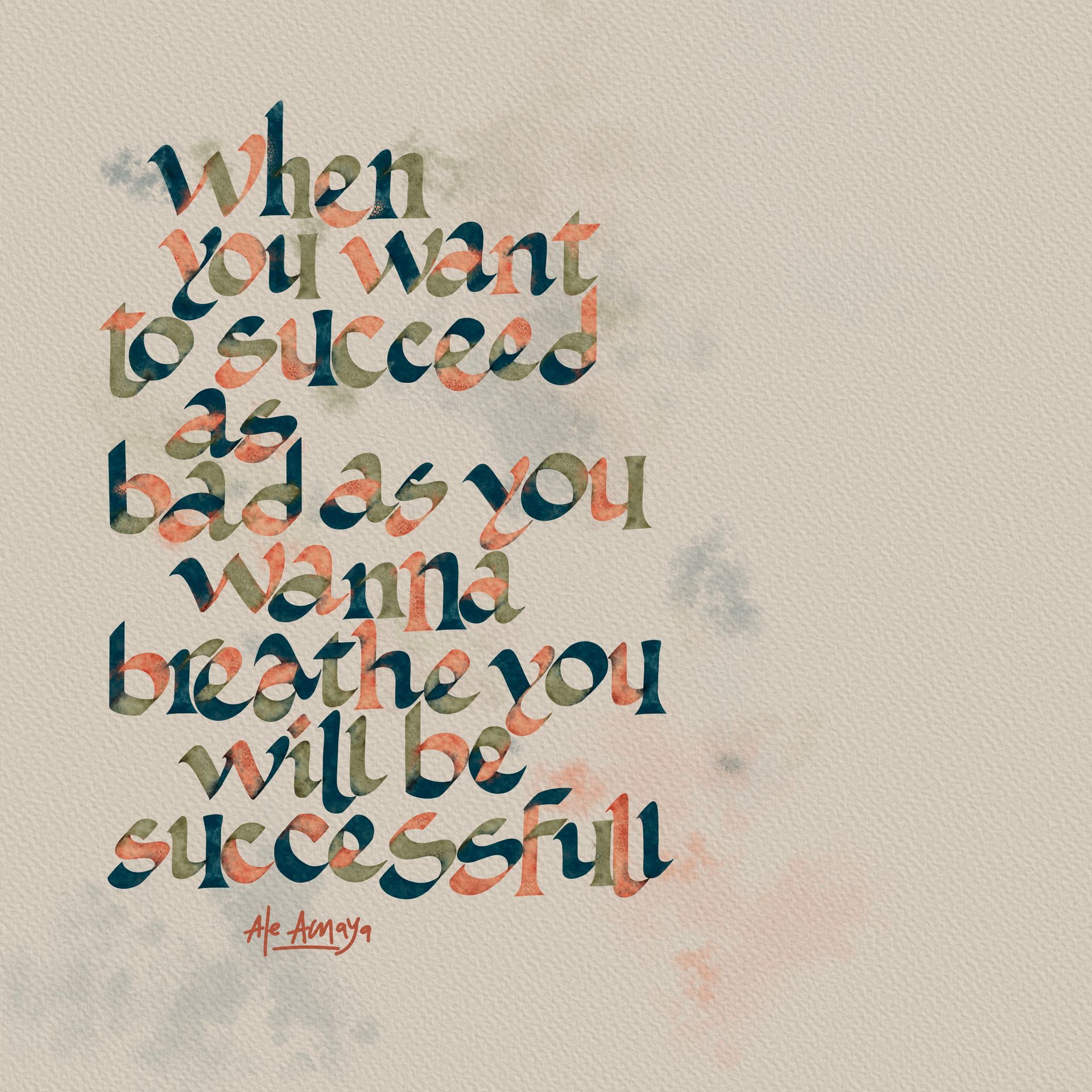
Photo: Modern Carolingian personal interpretation on Procreate by Ale Amaya.
4. LEARNING & OBSERVATION
How has your ability to see and analyse letterforms improved over time?
Over time, I've become much more analytical when I look at letterforms. In the beginning, I would simply think that a letter looked right or wrong, but I couldn't always explain why.
Now, I can recognise much more clearly what makes a letter work. I notice details such as proportions, spacing, stroke weight, rhythm, and how each letter relates to the others. I've also learned to look beyond individual letters and consider how they contribute to the balance and flow of the entire piece.
Training my eye in this way has probably been one of the biggest developments in my practice. It allows me to identify areas I want to improve and make more intentional decisions when I'm creating my own work.
What common mistakes do you now recognise in your own work that you didn’t notice before?
I'm much better at recognising subtle inconsistencies in my work. In Copperplate, I can usually tell when my ovals aren't quite right, whether they're too round or too narrow, and I can see how that affects the overall composition.
With Carolingian, I'm more aware of how changes in colour, letter size, or proportions can affect the balance of a piece. Sometimes an idea that seems good at first simply doesn't work, and I'm now able to recognise that and make adjustments.
Overall, I find it much easier to identify what isn't working and why.
How do exemplars or model alphabets support your learning right now?
I don't rely on exemplars as much anymore because I have a much better understanding of how the letterforms are constructed. Rather than copying them, I use them as inspiration or a point of reference.
For example, in Copperplate capitals, I understand how certain groups of letters share similar structures and flourishes. That allows me to create my own variations while keeping those relationships consistent, so the overall piece still feels balanced and cohesive.
I still enjoy looking at other calligraphers' work for ideas, but I'm more interested in interpreting those ideas in my own way than reproducing them exactly.
What role does repetition play in your improvement at this stage?
Repetition still plays an important role, but not in the same way it did when I was starting. I don't spend much time repeating individual letters or drills anymore. Instead, I improve by creating complete pieces, where the same principles naturally come up again and again.
Each new piece gives me another opportunity to refine my spacing, rhythm, and composition, so the repetition happens through creating rather than copying the same exercises.
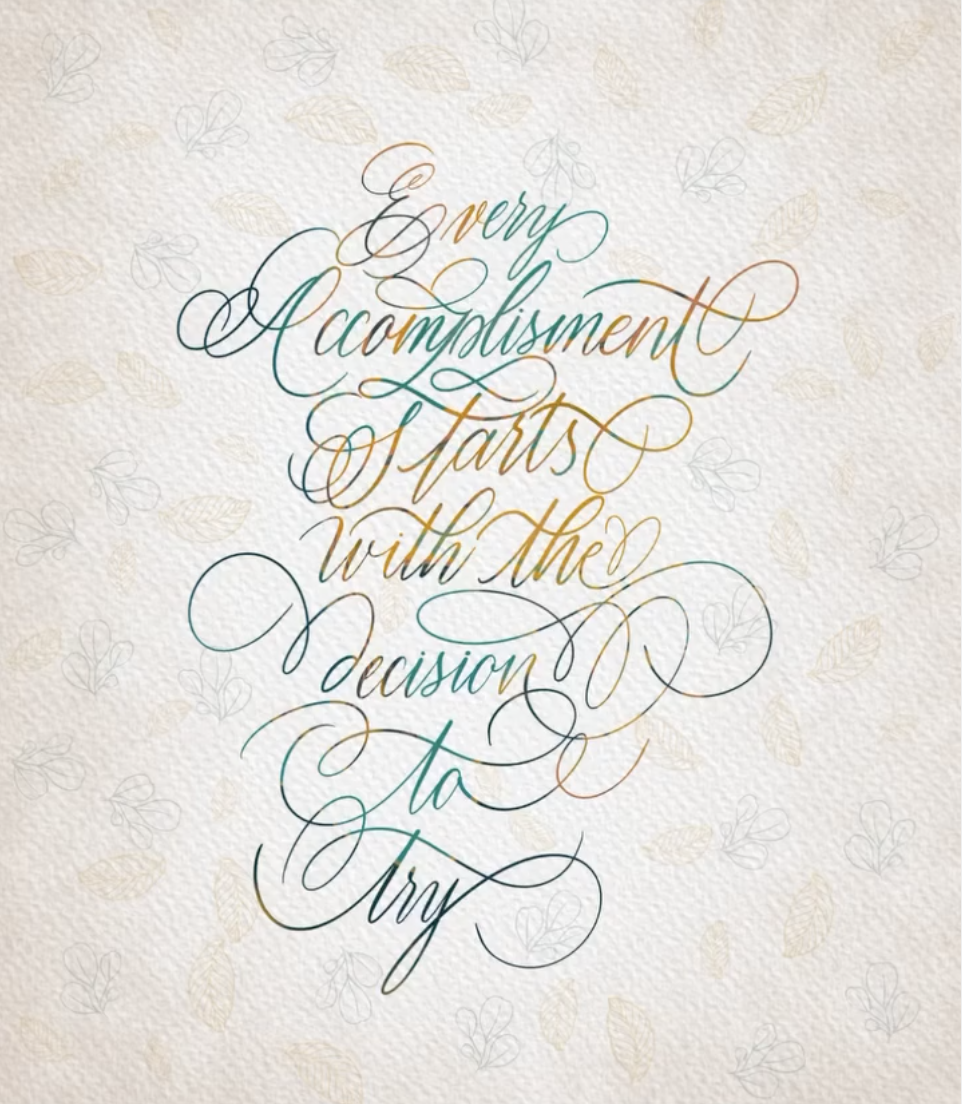
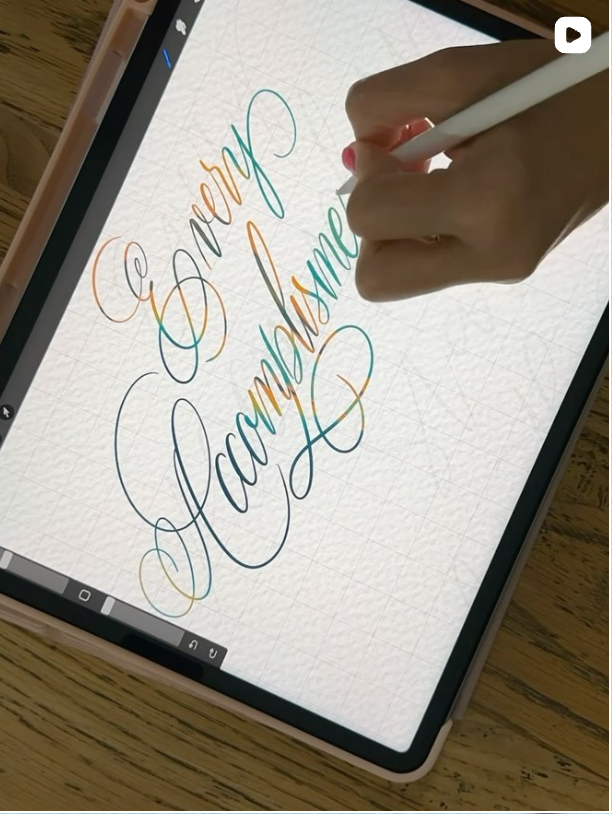
Photos: Personal interpretation of Copperplate calligraphy on Procreate by Ale Amaya.
5. Developing Confidence & Voice
When do you feel most confident in your writing, and when does doubt appear?
I feel most confident when I've been practising consistently. After a few weeks of regular practice, I notice that my writing flows more naturally, I make fewer mistakes, and I feel much more comfortable creating complete pieces. Seeing that progress gives me confidence.
Doubt usually appears when I compare my work to calligraphers who have spent years practising professionally. It's easy to forget that they dedicate far more time to their craft than I can alongside my full-time job. When I remind myself of that and focus on my own progress rather than someone else's, I feel much more positive about my work and the direction it's taking.
Are there early signs of personal preference or style emerging in your work?
My strongest preference is definitely Copperplate. I love its elegance and structure, but I'm equally drawn to Modern Carolingian because it gives me more freedom to experiment. I enjoy playing with colour, incorporating watercolours, and exploring different compositions. It feels like a script that allows me to be more expressive.
How do you balance following rules with experimenting a little?
Because I don't work as a professional calligrapher, I feel I have more freedom to experiment. I still respect the rules and understand why they're important, but I'm also happy to try ideas that aren't necessarily traditional.
For example, I once created a Carolingian piece using Blackletter capitals. It may not follow convention, but I wanted to explore whether the combination worked visually. Sometimes those experiments are successful, and sometimes they aren't, but they're all part of the learning process.
I think the more you understand the rules, the more confidently you can experiment while still creating something that feels balanced and intentional.
What kind of calligraphy work feels just outside your comfort zone right now?
At the moment, Roman Capitals and Blackletter are the styles that feel just outside my comfort zone. They're not scripts I naturally gravitate towards, so I haven't practised them as consistently as Copperplate or Modern Carolingian.
I enjoy the challenge of working with them, but I know they would require much more dedicated practice before I felt truly confident using them.
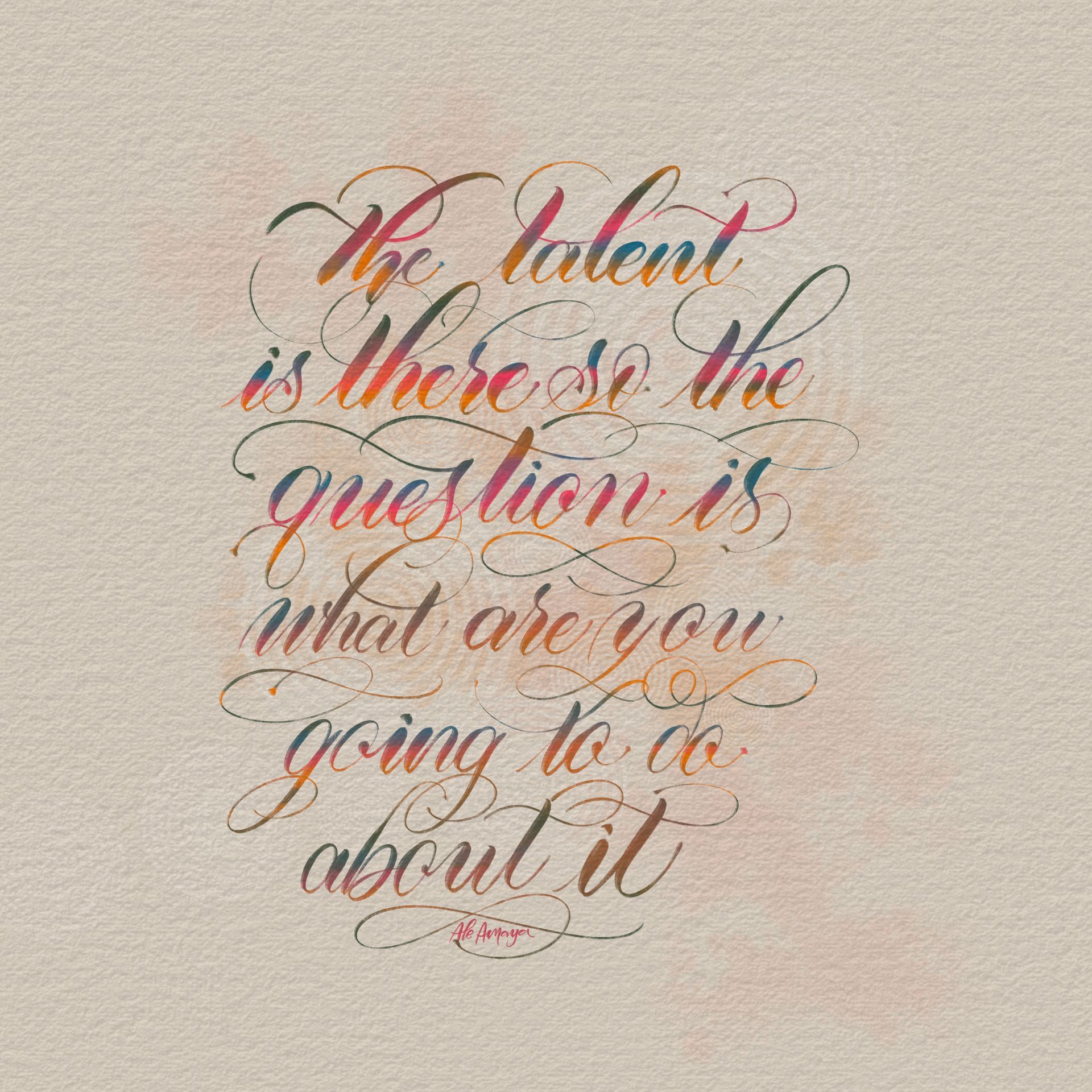
Photo: Personal interpretation of flourished Copperplate calligraphy on Procreate by Ale Amaya.
6. FEEDBACK & COMMUNITY
How has receiving feedback influenced the way you practice calligraphy?
Receiving feedback has been invaluable because a teacher has a much more trained eye. They can immediately recognise what's not working and explain why, whereas, especially in the beginning, I could only tell that something felt wrong without being able to pinpoint the reason.
Over time, that feedback has helped me train my own eye. It's taught me to recognise those same details for myself, making me much more aware of the small adjustments that improve a piece.
What type of feedback do you find most useful at this stage of learning?
At this stage, I find feedback on the overall composition much more valuable than comments on individual letters. I'm more interested in understanding the balance, spacing, rhythm, and flow of a piece as a whole.
I also appreciate feedback that encourages me to look more closely at my own work rather than simply telling me what's wrong. It helps me develop my eye and learn to recognise those details for myself, which I think is much more valuable in the long term.
Do you share your calligraphy work on social media?
I did for a while. I shared both my calligraphy and watercolour work on social media, but over time it started to feel like a lot of work to maintain, so I gradually stopped.
I also went through a stage where I was hesitant to share my work because I worried about it being copied. Looking back, I think that was part of building confidence in my own work. I don't share much anymore, although I'd like to start doing it again in the near future.
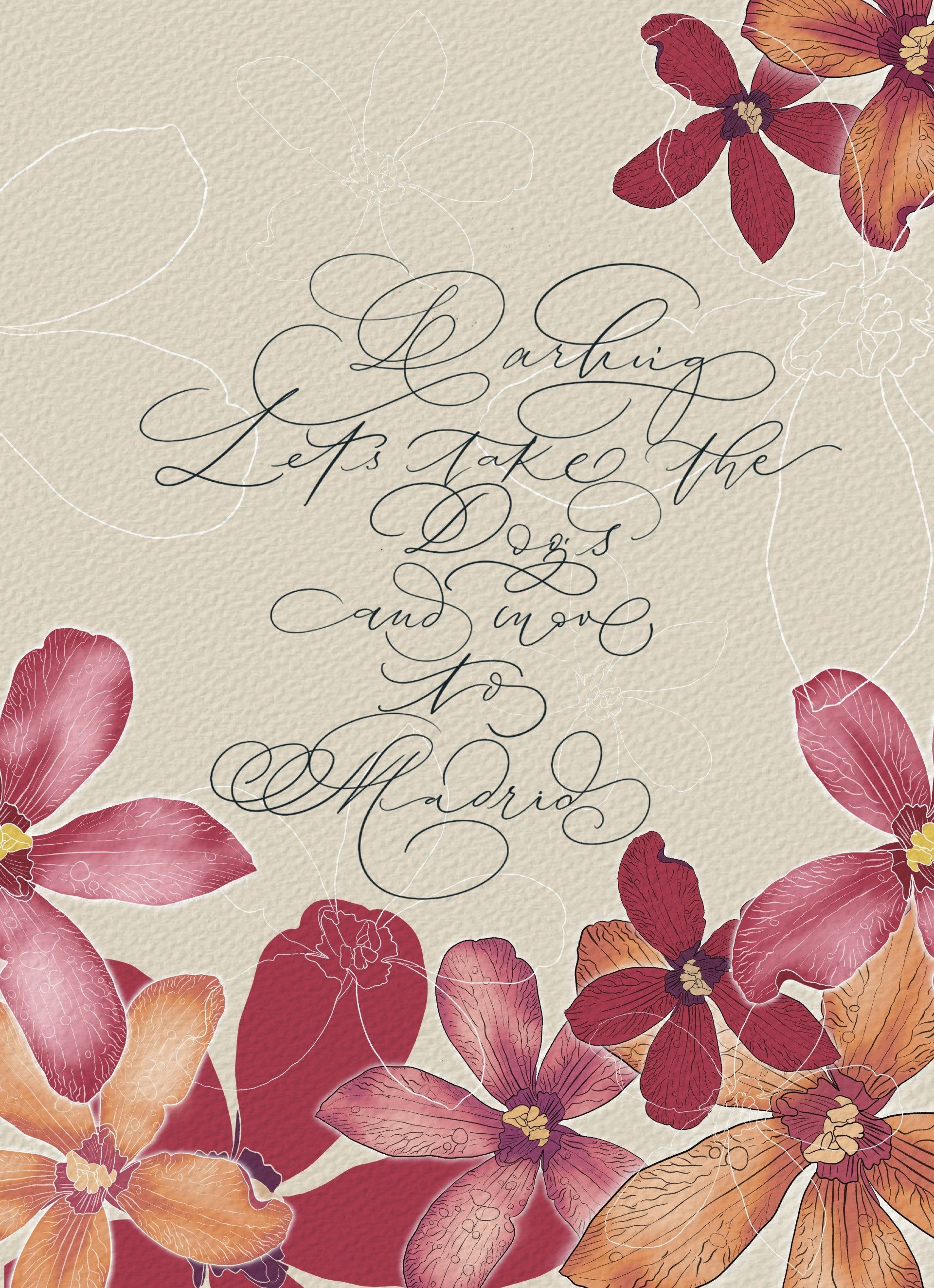
Photo: Personal interpretation of flourished Copperplate calligraphy on Procreate by Ale Amaya.
7. LOOKING ahead
What are your next goals in your calligraphy journey?
My next goal is to become truly confident in the scripts I connect with most, particularly Copperplate and Modern Carolingian. I want to continue refining them until they feel completely natural and genuinely reflect my own style.
Rather than mastering every script, I'd rather become really strong in the ones that resonate with me most and create work that I'm genuinely proud of.
Is there anything else you would like to add? News, updates, exciting projects ahead?
My long-term goal is to find a way to turn my calligraphy and artwork into a second career. I don't yet know exactly what that will look like, but I'd love to build a creative business alongside, and eventually beyond, my corporate role.
For now, my focus is on continuing to improve my skills, developing a style that feels authentically mine, and exploring different ways my calligraphy and illustrations could come together in future creative projects.
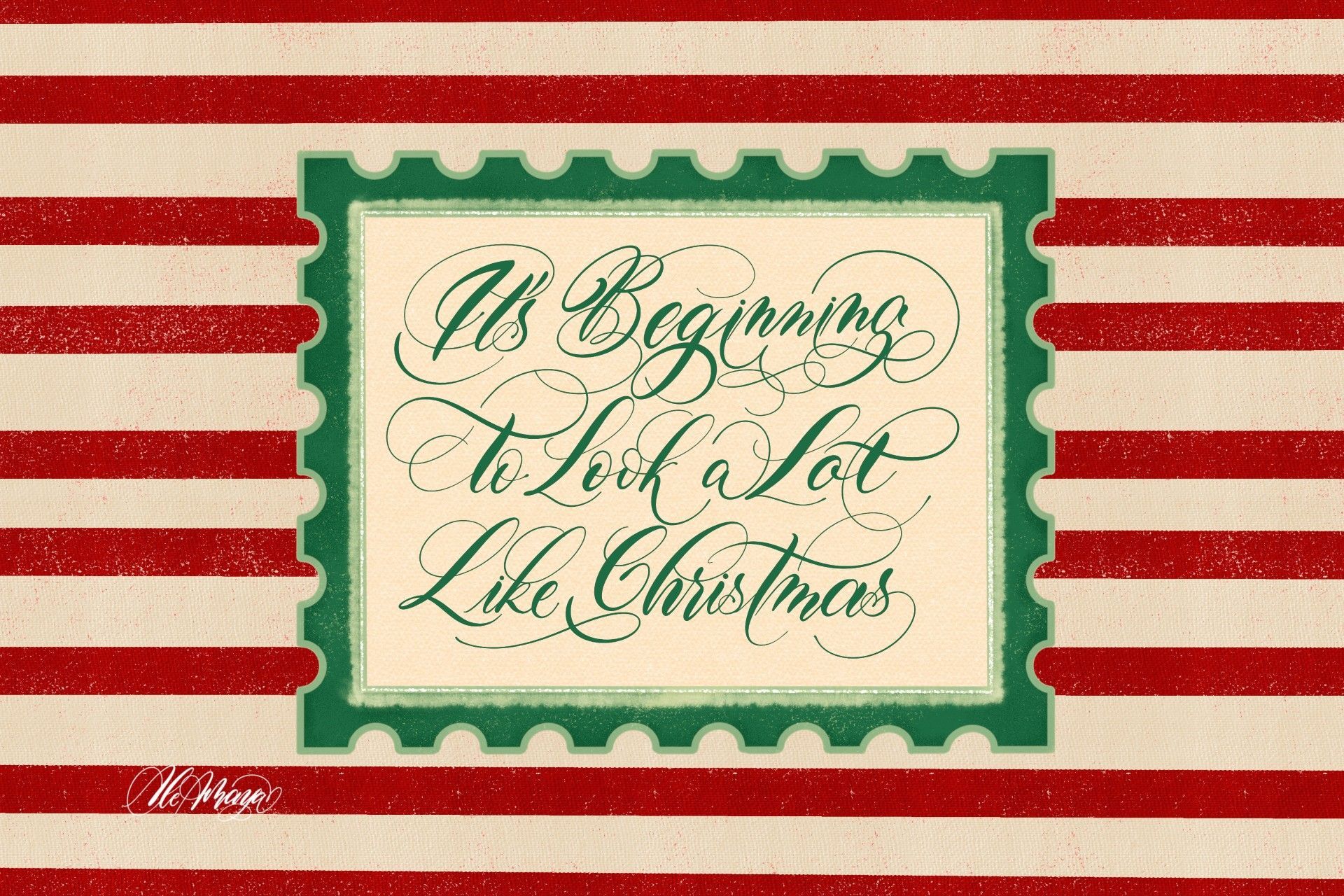
Photo: Personal interpretation of flourished Copperplate calligraphy on Procreate by Ale Amaya.