Calligraphy Student Spotlight: Paula Dakin

In this section of my educational website I interview professional calligraphers who make a living primarily from their work, as well as calligraphy students at different stages of their learning journey, as I’m very interested in both points of view.


My next Calligraphy Student Spotlight is with a dear student of mine, graphic designer and brand design consultant called Paula Dakin who has a deep love and respect for calligraphy.

Neus Sáez profile photo

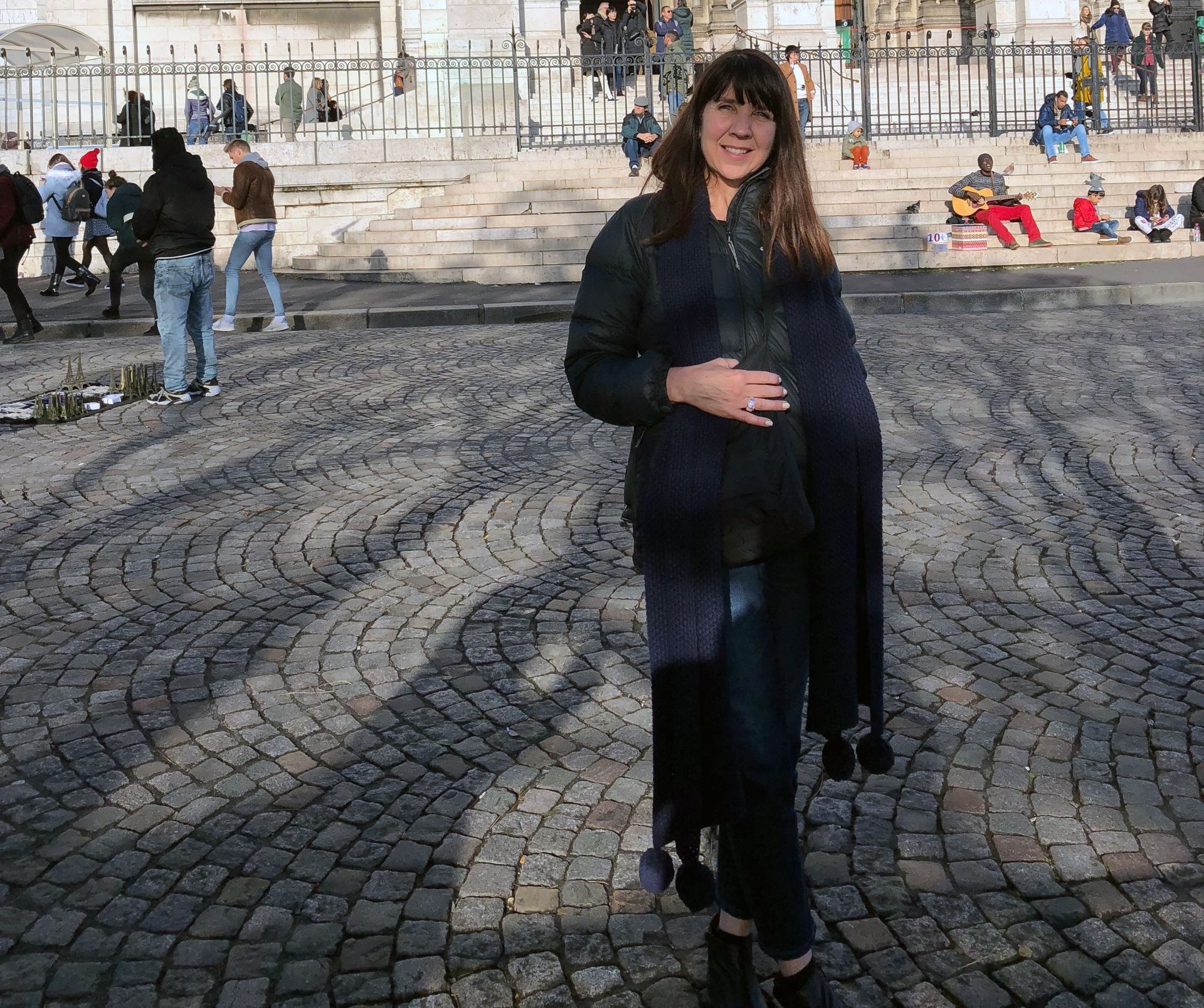
Profile photo: Paula Dakin


1. CALLIGRAPHY STUDENT PROFILE


What is your name, age, current occupation and location?


I'm Paula Dakin and currently working in brand design consultation and exploring new ways to combine my creative interests with career opportunities. I live in Elwood – a beautiful leafy suburb in the heart of Melbourne, Australia.

How long have you been practicing calligraphy?


I've been doing intermittent calligraphy classes for quite a long period, but actually practising the skill has been an 'on and off' process, usually centred around the time of each course. I think my first calligraphy short course was completed around 2018, and I've studied various styles in the years since.

How did you first discover calligraphy, and what drew you to it initially?


I've always appreciated the aesthetic appeal of lettering and handwriting. As a child, I loved watching my father write bold script in a ledger book with his heavy fountain pen, and used to try to sign my surname with the same flourishes he used. In Primary school, I spent a lot of time designing the front covers of my projects with 'bubble writing' complete with 3D shading and flourishes. It's no wonder I chose visual communication as a career.

Do you consider yourself a beginner, intermediate or advanced calligraphy student?


I'm sitting somewhere between beginner and intermediate stage. With a design background, I have experience in concept development, layout and typographic spacing, but still need to build up my 'pen driving hours' (as Maria would say). I improve each time I undertake a course, but need to fully embed a regular practice routine to get the consistency and steady hand required to progress to an intermediate level.

Have you taken any in-person or online courses? If so, do you have a preference?


I've tried both. I don't think you can beat the experience of being in the room with your teacher and other students – picking up all the nuances of the process and being inspired by the work around you. That said, it's definitely a skill that can be effectively taught online when you can't be there in-person.

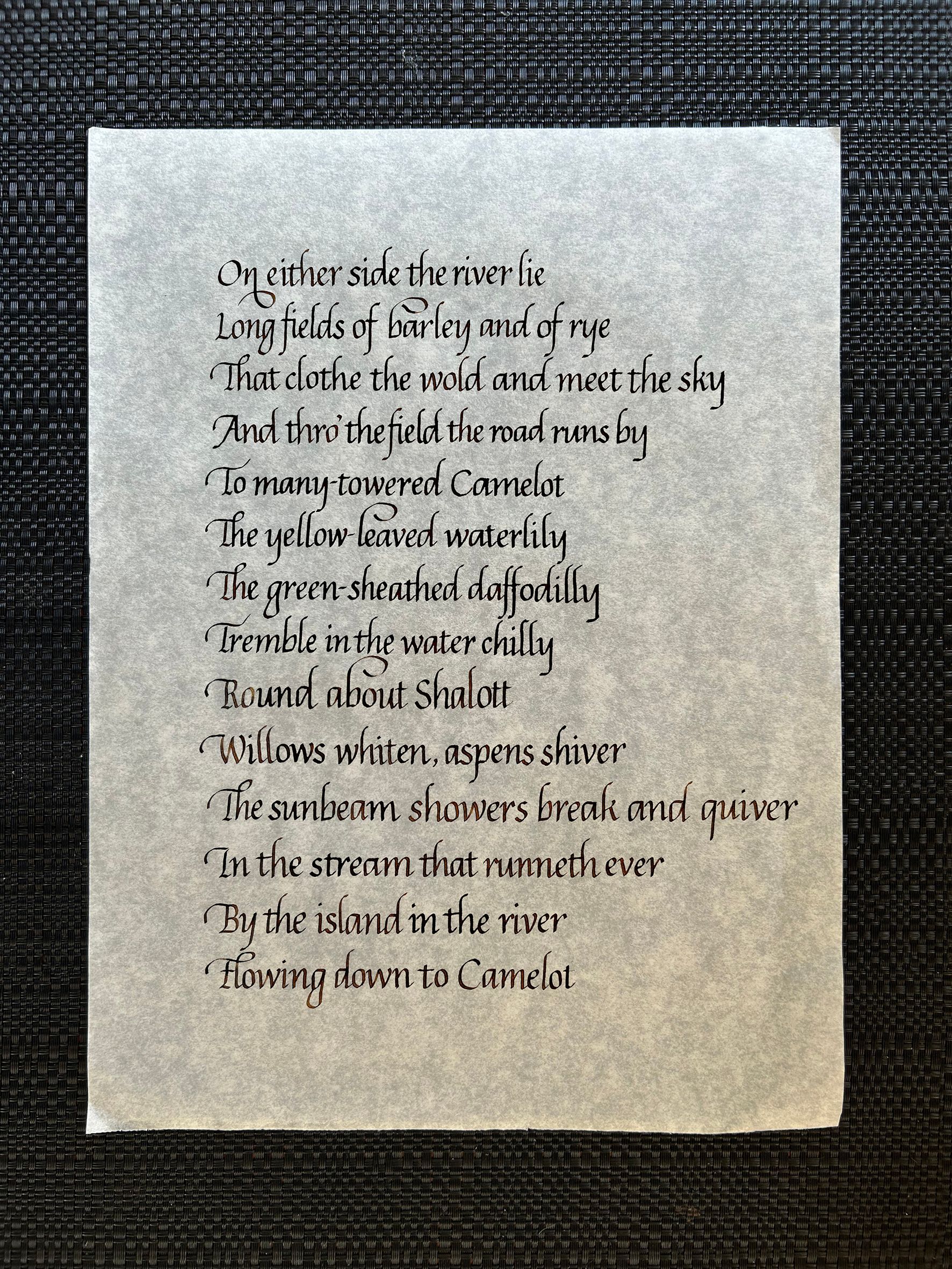
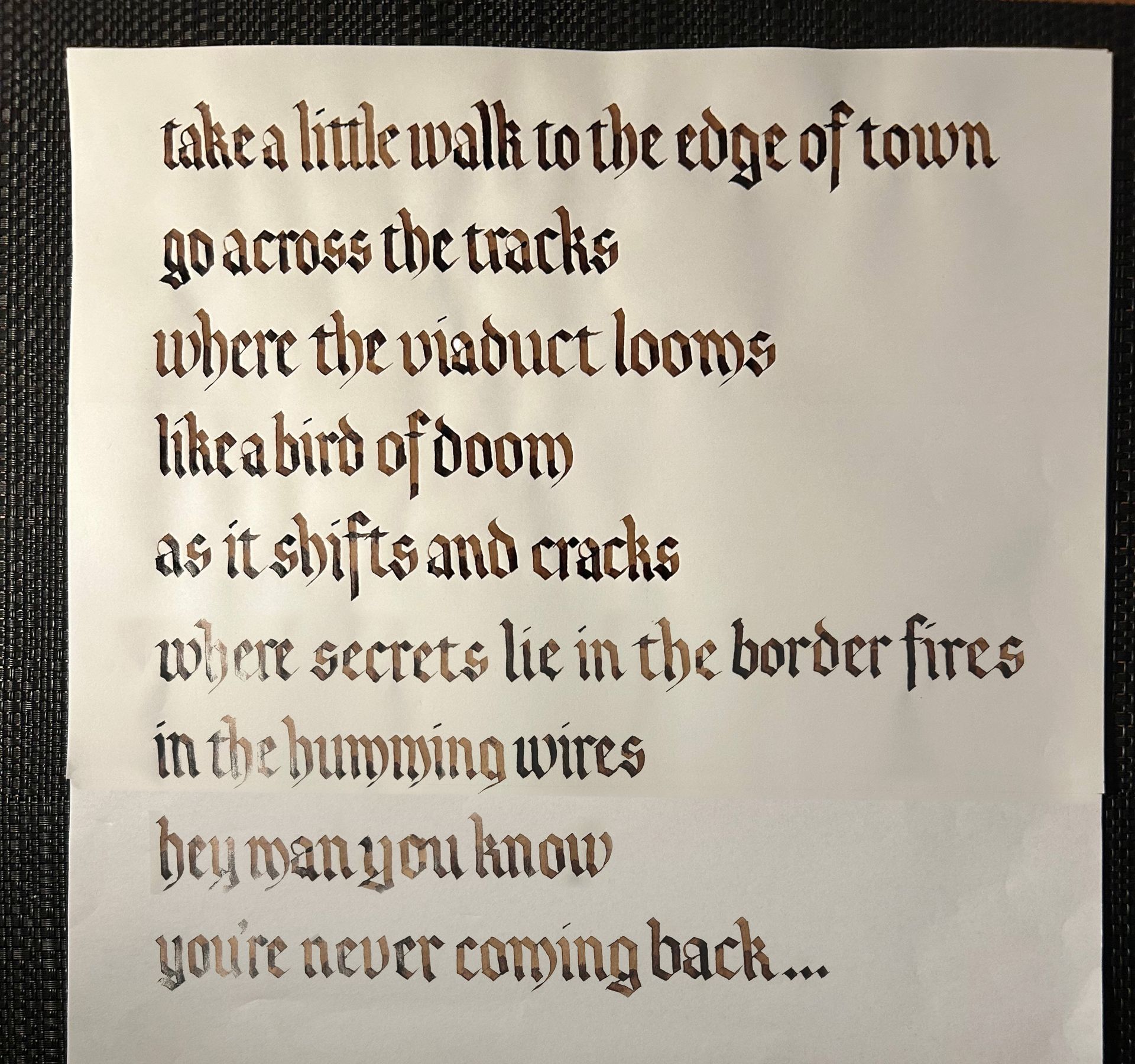
Italic calligraphy project by Paula Dakin. Size: A4.

Project credit: Italic calligraphy project by Paula Dakin. Size: A4.


Who or what has had the greatest influence on your development as a calligraphy student?


Honestly, Maria Montes has had the most influence on my calligraphy development. I've undertaken many of her courses, and attended her first weekend calligraphy retreat. Seeing someone with a passion for both the practice and passing on what she has learned has been inspiring. Even though Maria is an accomplished calligrapher, in her own way she relates to our student struggles to improve, and she critiques work from a place of empathy and understanding.

Do you have any recommendation for students wanting to start their calligraphy journey?


Try to get the experience of a calligraphy course to learn good foundational basics. Then start practising as often as you can and aim to enjoy the process. Don't be too hard on yourself in the beginning – it's great to look back after a few weeks and see how much your work has improved.

Which calligraphy scripts or styles do you feel most connected to, and why?


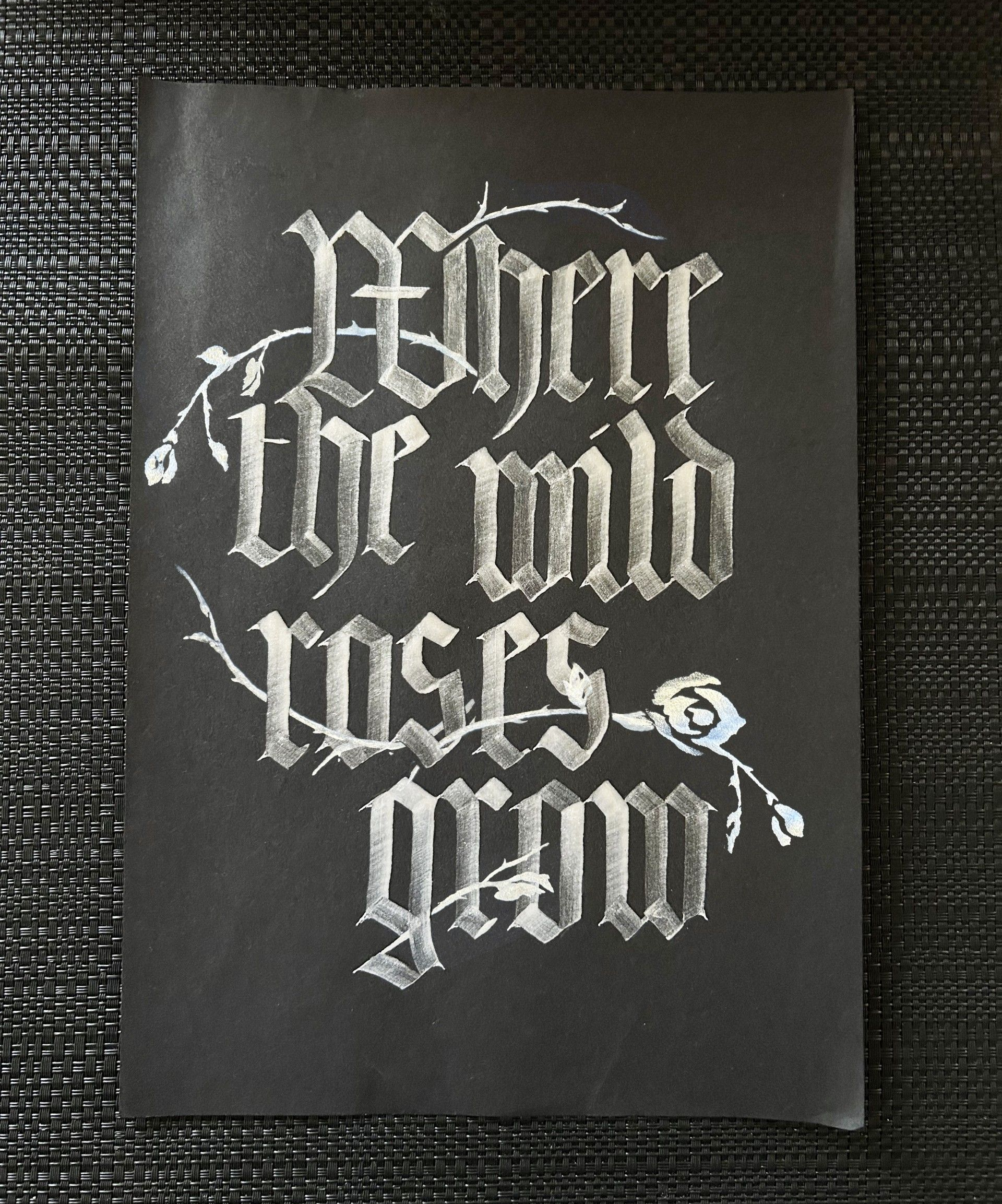
I love Copperplate for it's elegance and flow, and have recently become a fan of Blackletter – I'm attracted to the boldness and the gothic moodiness of its letterforms – visually, it packs a punch.

Is your calligraphy practice 100% analogue? Do you use Procreate or vector-based software at all?


At the moment it's 100% analogue, although I'm keen to try calligraphy on the digital platform. That said, as a graphic designer I've always found freehand sketching expands my creativity at the concept stage, and have loved the organic way elements like the texture of materials, and lack of technical precision, can add personality to a piece... I think those characteristics translate to calligraphy too.

Do you see calligraphy more as a hobby, a future job, a possible career or a vocation—or a combination?


A combination, but it's a work in progress. Where possible, I try to wrap my work and creative passions together. Life's too short to not try to enjoy what you're doing the majority of time.

Have you done any client work? If so, how did you find the experience? Would you like to do it again? If not, would you like to do it at all?


I’ve completed a lot of client work in a design sense, which has incorporated typography, lettering and imagery, but not technically worked as a calligrapher. I'd like to take on some commissions, but accept that it will be a learning curve, and satisfying clients will add pressure to the process.

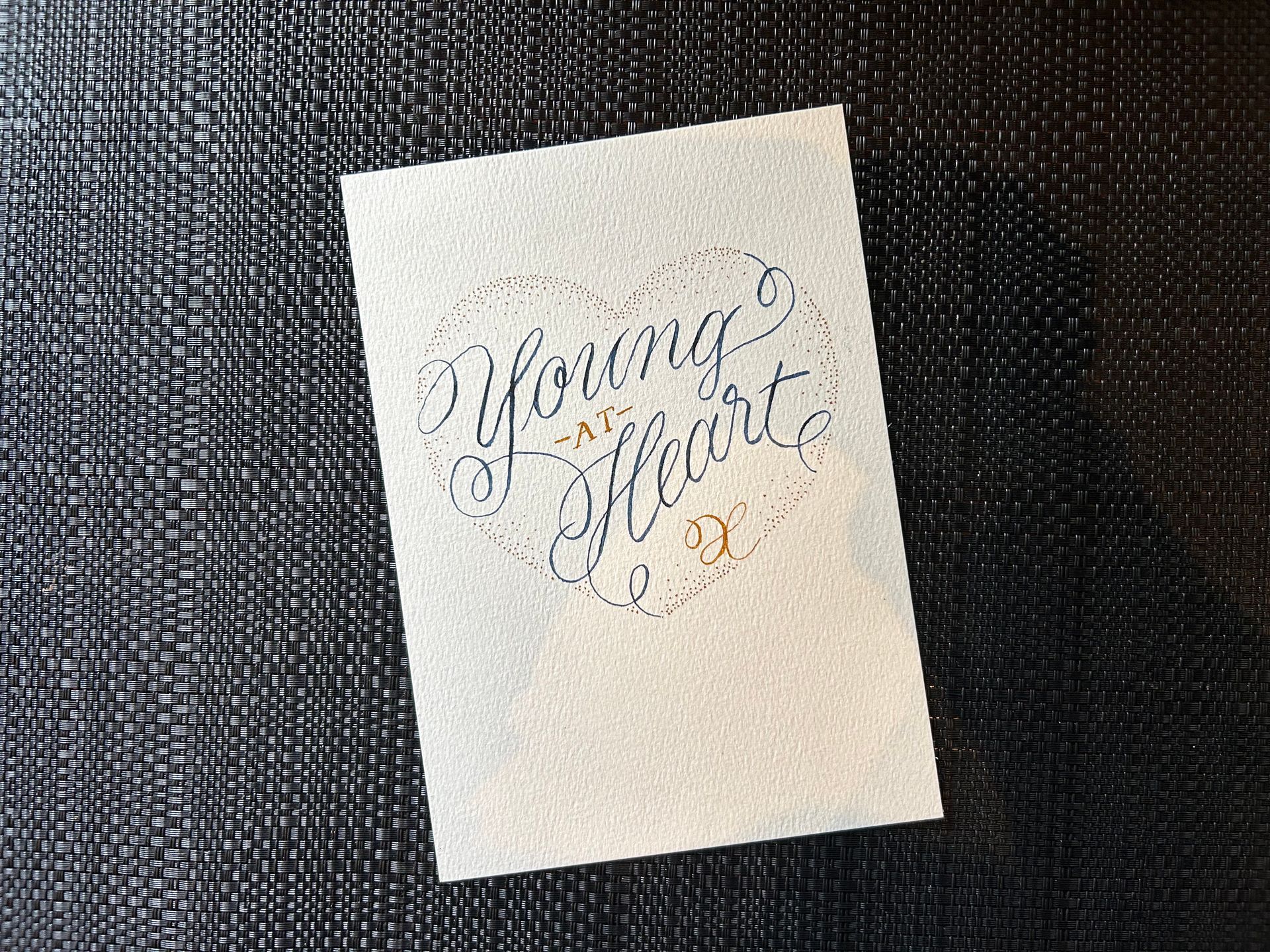
A5 greeting card design by Paula Dakin.

Project credit: A5 greeting card design by Paula Dakin.


2. Consolidating Fundamentals


Which foundational calligraphy skill do you feel most confident in now, and which still needs reinforcement?


My control of contrast in lineweight and my spacing across letters and words have improved, but there's still a lot of practice required before I'll reach the consistency that I'm looking for across a page of work. I've found swashes and flourishing difficult to execute smoothly, but I'm making progress.

What technical habit has been hardest to unlearn as you progressed?


My design work has often been based on the computer, but the body posture required for calligraphy is different. I'm not sure that's a 'technical habit', but I'm trying to be aware of how I'm sitting at the desk over the work and maintaining a good position for writing. Otherwise I find that my work is inconsistent, and my shoulders sometimes tighten up in an attempt to control and almost force the nib to 'do better'. :)

How has your understanding of basic letter structure changed since you began?


I'm more aware of how consistency in fine details like loops and oval shapes can make or break the elegance of a piece.

What recently “clicked” for you in your practice?


The importance of being aware of breath and fluid arm movement when you're trying to smoothly control the pen. Recently I've become aware of a sort of rhythm that experienced calligraphers use when they're flourishing and lifting the nib of the paper at the end of a line.

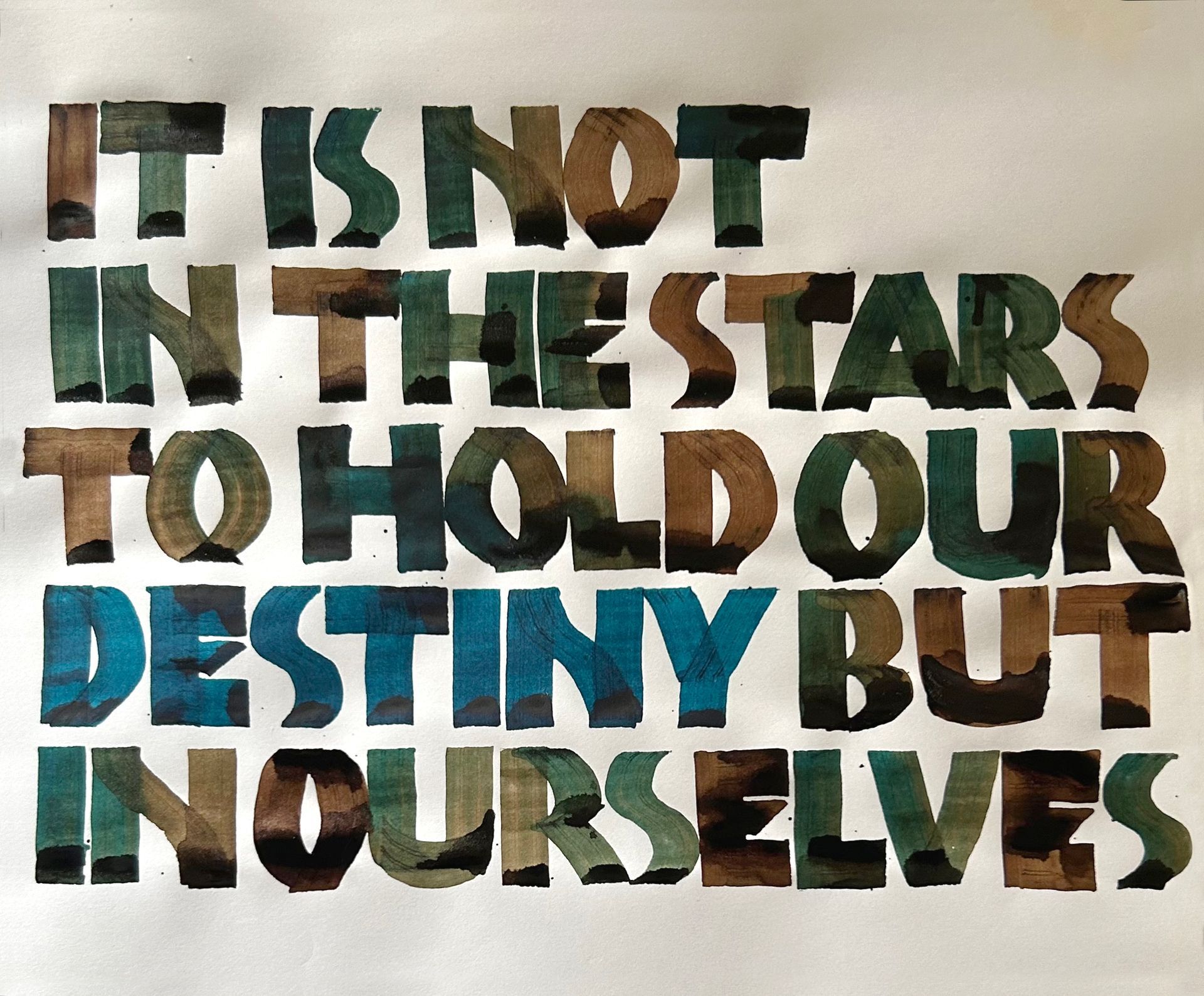
Assorted handwritten calligraphy cards with quotes, arranged in a scattered fan on a light background

Project credit: Neuland calligraphy using walnut ink and liquid watercolours by Paula Dakin.


3. PRACTICE & CONSISTENCY


How do you currently structure your practice sessions?


Recently I've been trying to maintain the habit of practising every day, preferably in the morning, even if it's only for 15 minutes when I'm busy.

What helps you stay consistent when progress feels slow or uneven?


You have to accept that your calligraphy will flow more easily some days than others, and it's especially noticeable when you're at beginner level. Sometimes slowing down and changing the process somehow – the nib, the ink colour, even the paper you're using – can get you out of a rut.

How do you decide what to focus on when you sit down to practice calligraphy?


It's a bit of a subconscious decision for me, and can change according to my mood on a particular day. Sometimes I'm happy to repeat writing words until I see an improvement in style, and other times I'm looking to practise something a lot more creative and free form.

What kinds of exercises have been most helpful at this stage?


At the stage I'm currently at, doing repetitions of a piece usually seems to achieve encouraging improvement.

Blackletter calligraphy by Paula Dakin.

Project credit: Blackletter calligraphy by Paula Dakin.


4. LEARNING & OBSERVATION


How has your ability to see and analyse letterforms improved over time?


It's interesting. Initially you analyse on a surface level, and just know that a piece of calligraphy looks good or not. But you can't necessarily pinpoint the characteristics that are contributing to that result.


As you progress, you start to see more of the elements that make up a style – the contrast, the shapes, the spacing – and are able to judge when they're working well together.

What common mistakes do you now recognise in your own work that you didn’t notice before?


The main inconsistency for me has been in character width. I have a tendency to write wide, and the habit creeps into the middle of a longer piece sometimes.

How do exemplars or model alphabets support your learning right now?


They're a great reference when learning the standard style of each letter, and the variations provide ideas when I'm ready to extend into designing a composition.

What role does repetition play in your improvement at this stage?


It plays an important role. Even on 'off days', I usually see a improvement of character styling and consistency across multiple drafts.

DL envelope written in Copperplate calligraphy  usign a pointed flexible nib and golden gouache ink by Paula Dakin.

Project credit: DL envelope written in Copperplate calligraphy  usign a pointed flexible nib and golden gouache ink by Paula Dakin.


5. Developing Confidence & Voice


When do you feel most confident in your writing, and when does doubt appear?


When I've put in sufficient recent practice to feel confident with the writing tool and the calligraphy style. The muscle memory is there, and It frees me up to focus on the job at hand.


I struggle most when I change to a completely different tool, like when I moved from a pointed nib to a brush pen recently. It took me a few hours of practice to become accustomed to the more subtle feel of the brush on the paper surface when I was trying to create thin strokes.

Are there early signs of personal preference or style emerging in your work?


I'm attracted to styles with strong personality such as extreme contrast or movement, and generally prefer lots of negative space and elegance.

How do you balance following rules with experimenting a little?


For me, it's an extension of my practice as a graphic designer. I've always liked adding a personal touch to my work. It makes it more uniquely yours.

What kind of calligraphy work feels just outside your comfort zone right now?


Doing work in front of a client audience, or when you're working on material that has no room for error! At this stage I'd also find it difficult working free form, such as on a 3D surface where it's hard to use guides.

DL envelope written in Copperplate calligraphy  usign a pointed flexible nib and golden gouache ink by Paula Dakin.

Project credit: Blackletter calligraphy by Paula Dakin.


6. FEEDBACK & COMMUNITY


How has receiving feedback influenced the way you practice calligraphy?


I've improved through the learning, and been motivated when I've compared the revisited project to my original attempt.

What type of feedback do you find most useful at this stage of learning?


It's been most useful when I've had a project draft ready early enough to get a critique and apply improvements to the final piece. That's a process I wish I'd prioritised earlier in the course.

Do you share your calligraphy work on social media?


Not yet, but I'd like to in the near future.


7. LOOKING ahead


What are your next goals in your calligraphy journey?


To maintain a daily calligraphy practice now that I've finished a 16 class series. I'd like to improve my skill level, but also create some more comprehensive projects to discover ways to express my personal design style.

Is there anything else you would like to add? News, updates, exciting projects ahead?


This is a bit of a teaser because I'm not ready to share the details, but doing the course has given me the idea of an interesting career change that I'm currently exploring. It's related to the skills I've been developing in calligraphy, and inspired by the entrepreneurial ventures of Maria and many of my fellow students.

Where can people find your work online?” (website / socials)


This is a 'coming soon'. Once I build up a few more pieces of work that I'm happy with, I'd love to get them out into the world.

Ale Amaya sitting on a wooden floor beside a relaxed dog, smiling at the camera.
By Maria Montes July 10, 2026
This interview spotlight features calligraphy student Ale Amaya from Naarm/Melbourne, sharing her trajectory and experience with calligraphy since 2019.

Black-and-white close-up portrait of a Ramin Moheb, facing the camera with a neutral expression.
By Maria Montes June 18, 2026
Calligraphy interview featuring student Ramin Moheb. Learn more about calligraphers students, their journeys, challenges & how they got started in the first place!
Calligraphy Meditation logo with teal script and lotus inside a dark circular line on white background
By Maria Montes June 5, 2026
This month of June 2026, I’m joining an online gathering to explore the healing power of calligraphy—where presence matters more than perfection, and I would love to invite to join me.