Calligraphy Student Spotlight: Nida Asad
In this section of my educational website I interview professional calligraphers who make a living primarily from their work, as well as calligraphy students at different stages of their learning journey, as I’m very interested in both points of view.
My next Calligraphy Student Spotlight is with a dear student of mine, and support educator called Nida Asad who worked really hard during the entire duration of Learning To See Calligraphy Course 2026, delivering homework every single week and showing a lot of interest and commitment.

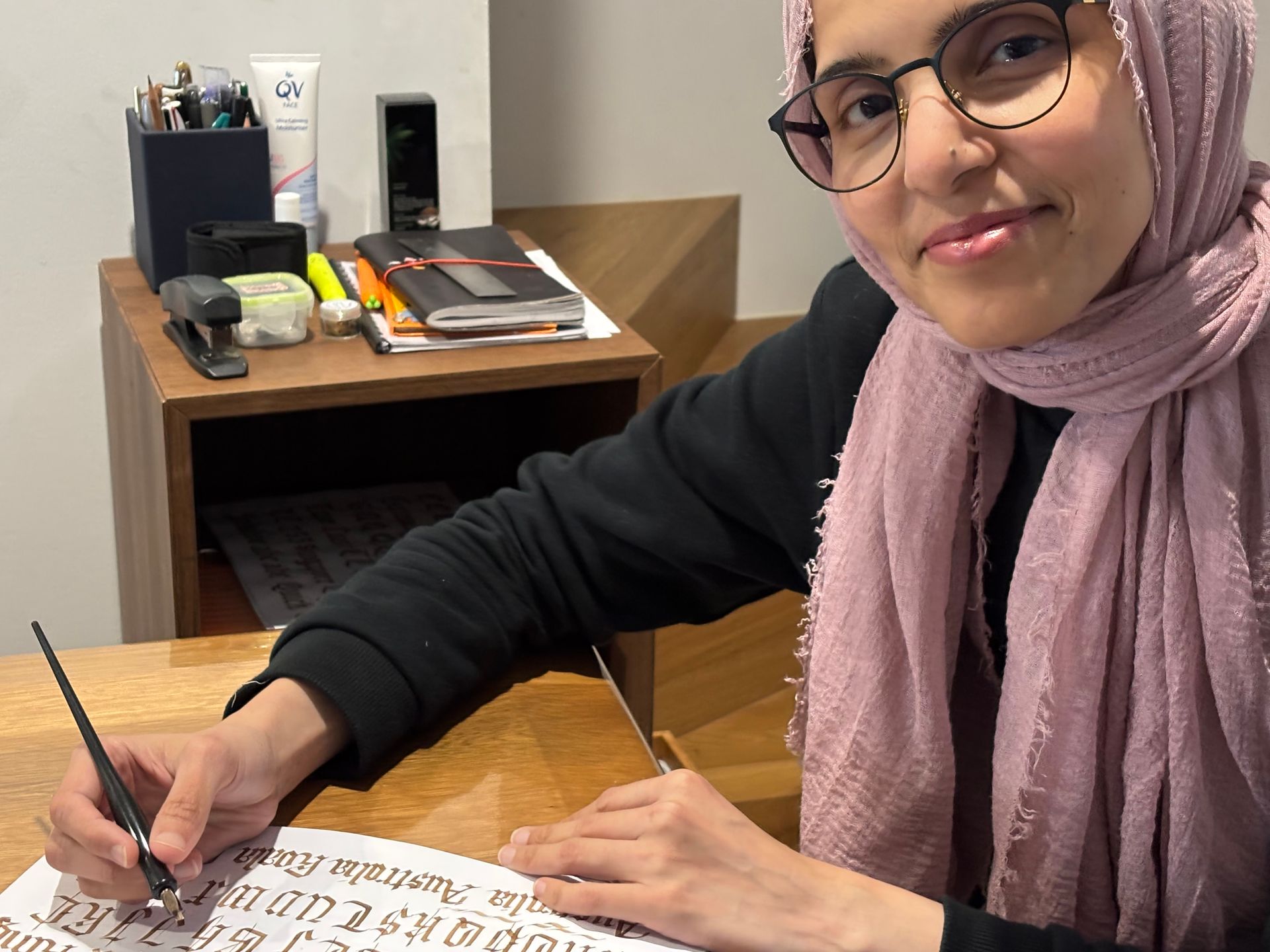
Profile photo: Nida Asad
1. CALLIGRAPHY STUDENT PROFILE
What is your name, age, current occupation and location?
Nida Asad, 45 years, works in Education Support, Melbourne (Australia).
How long have you been practicing calligraphy?
Well, I have enjoyed writing by hand forever. As for calligraphy, that I have just started practicing this year!
How did you first discover calligraphy, and what drew you to it initially?
I have always been fond of handwriting rather than typing. A hobby that would let me enjoy writing even more has to be calligraphy.
I have been told by teachers, friends and at workplace that my long handwritten texts appear beautiful. That encouraged me to look into proper calligraphy.
Do you consider yourself a beginner, intermediate or advanced calligraphy student?
Definitely a beginner.
Have you taken any in-person or online courses? If so, do you have a preference?
I picked up a course on Brush Lettering with Udemy in 2020. Just this year, I attended Learning to See Calligraphy Course with Maria Montes.
I think in person courses are preferable when you are keen to understand the basics.

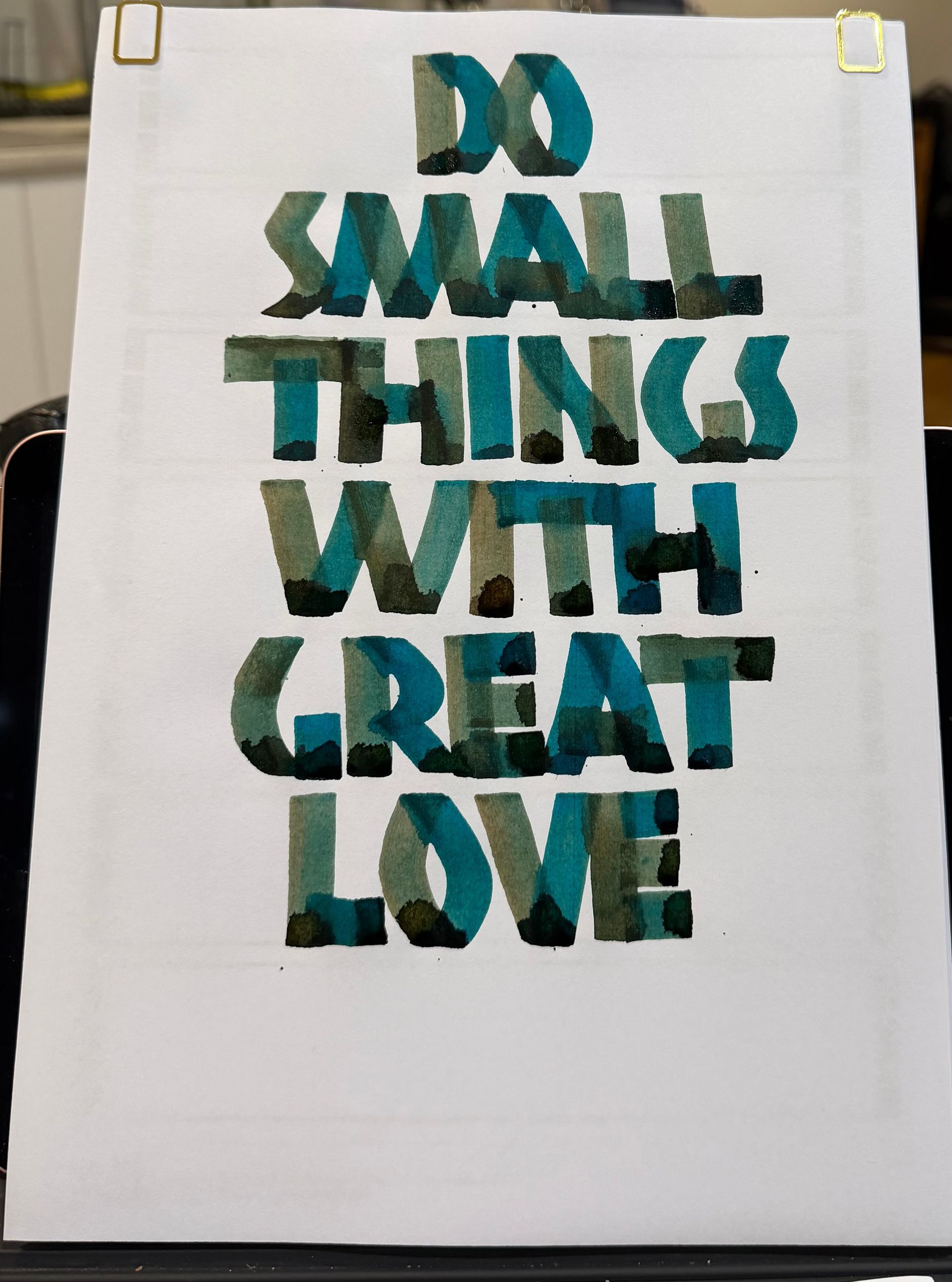
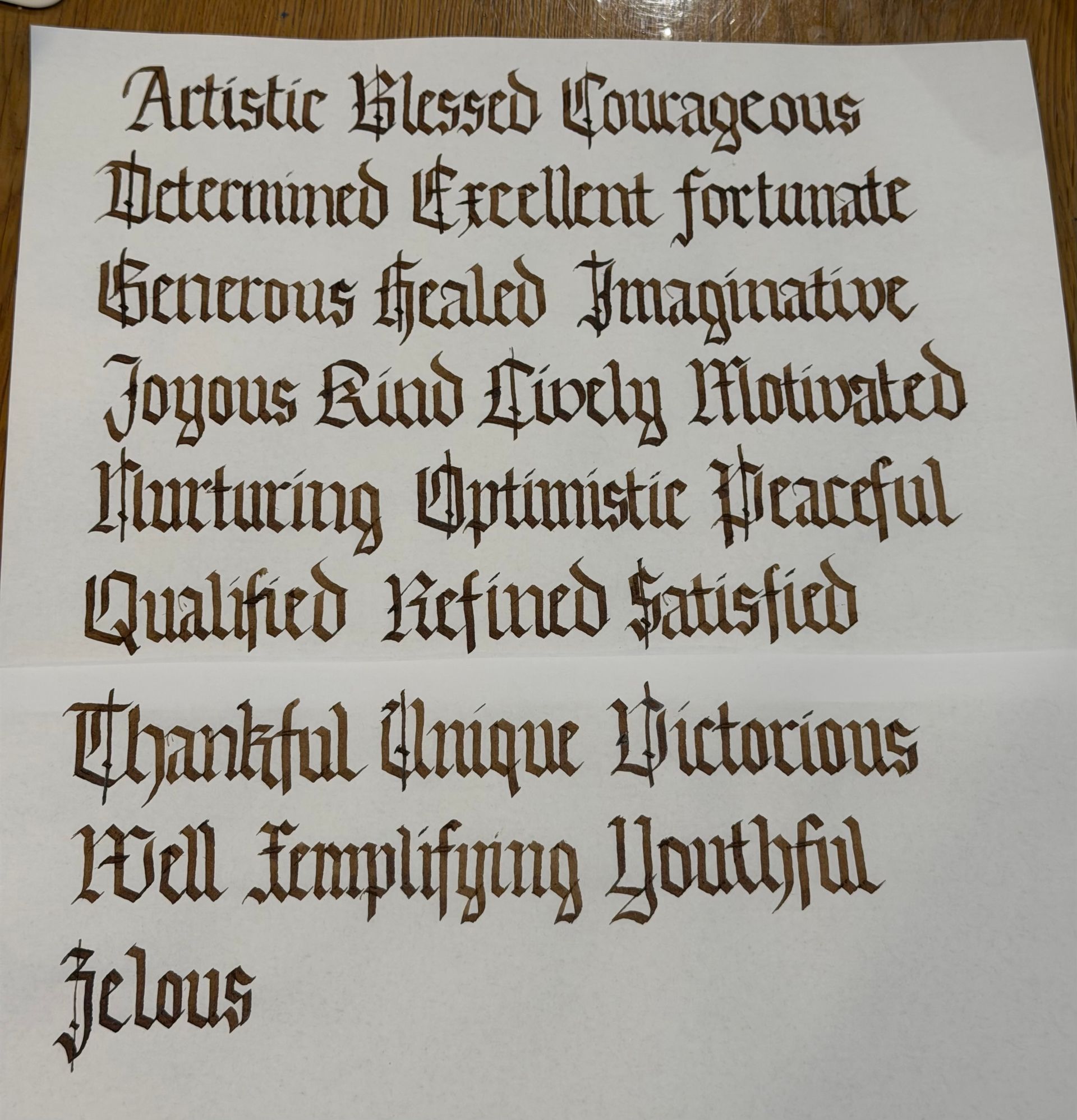
Project credit: Neuland calligraphy project by Nida Asad. Size: A4.
Who or what has had the greatest influence on your development as a calligraphy student?
My first calligraphy teacher
Maria Montes. She has amazed, encouraged and motivated me altogether.
Do you have any recommendation for students wanting to start their calligraphy journey?
If you really want to learn calligraphy, look for some professional teacher who can guide you with the basics. Don't spend too much on fancy stuff and don't get overwhelmed with what you see on the internet.
An in-person course, basic stationery and regular practice of what you learn can take you miles. Be patient with yourself and enjoy the journey!
Which calligraphy scripts or styles do you feel most connected to, and why?
I really admire Copperplate calligraphy due to its delicate and elegant nature. Although I am still at the beginning of my journey, I dream of getting proficient and comfortable with this style over time.
Another style I am drawn to is
Blackletter. In contrast to Copperplate, I like its dark, bold and structured appearance. Interestingly, I have found Blackletter calligraphy a little easier to handle because of its more rigid, mechanical and structured strokes.
Is your calligraphy practice 100% analogue? Do you use Procreate or vector-based software at all?
At present my practice is entirely analogue, however once I feel confident and comfortable with my lettering, I would love to explore
Procreate and see how I can incorporate digital tools into my practice.
Do you see calligraphy more as a hobby, a future job, a possible career or a vocation—or a combination?
For me calligraphy is a beloved hobby. However, I dream of becoming confident and proficient enough in this art that, one day I can turn my passion into a small source of income.I know its wonderful being able to earn a little doing something that you genuinely love.
Have you done any client work? If so, how did you find the experience? Would you like to do it again? If not, would you like to do it at all?
At this point, I feel I still have a lot of work to do before I can take client work. However, its definitely something that I would love to explore in the future. With regular practice, patience and growing confidence in my skills, I hope to reach a stage where I am able to take on commissions and create something meaningful for others.

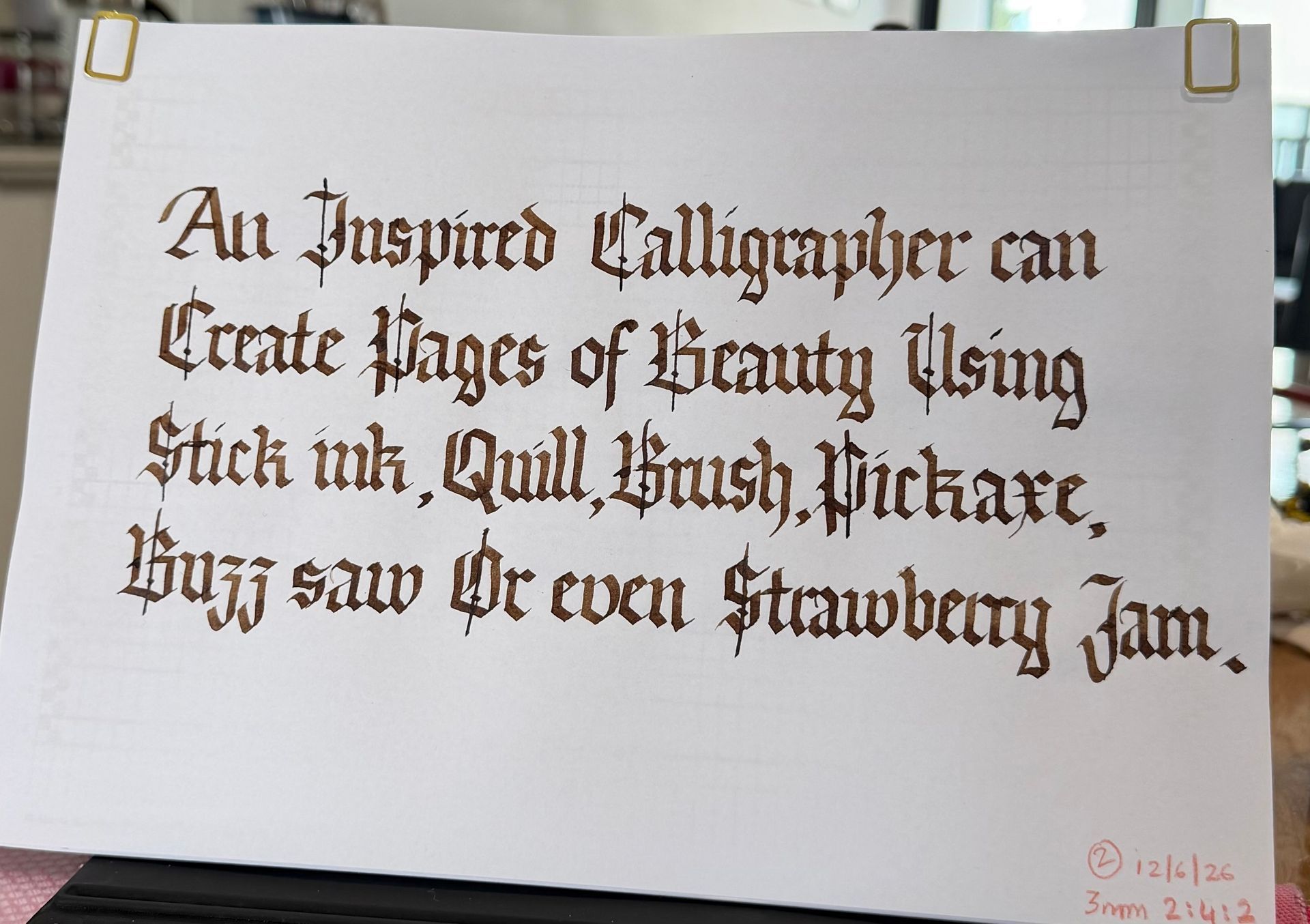
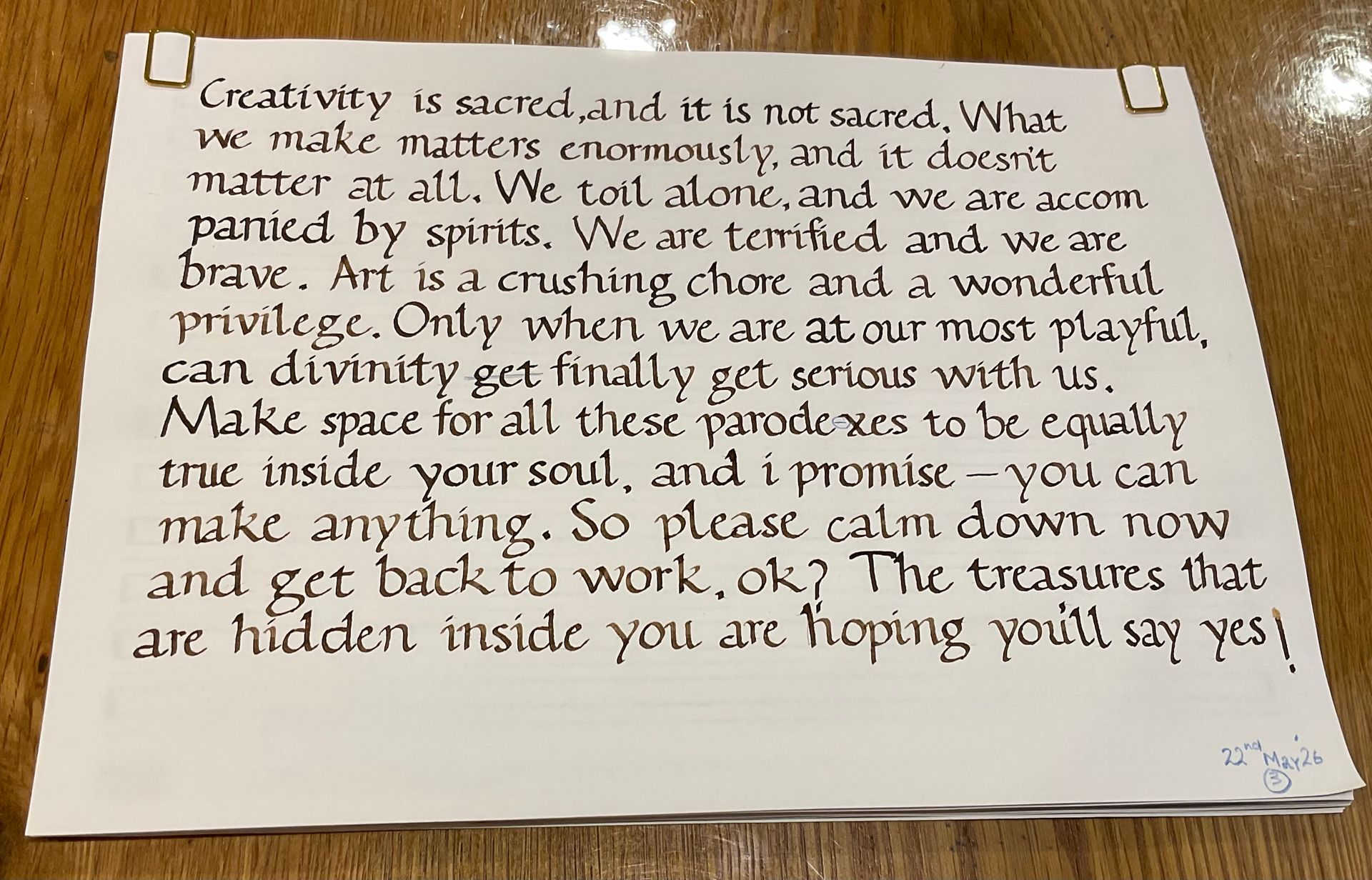
Project credit: Blackletter calligraphy project by Nida Asad.
2. Consolidating Fundamentals
Which foundational calligraphy skill do you feel most confident in now, and which still needs reinforcement?
I feel quite confident in understanding letterforms, from Foundational to the more complex styles like Blackletter.
One area I still need to work on is maintaining a consistent slant in Copperplate. I need to consciously remind myself of this during my practice and I hope to develop better consistency over time.
What technical habit has been hardest to unlearn as you progressed?
One habit I am working to unlearn is my relaxed, sometime slouched posture. I have to remind myself to sit upright, yet have a comfortable position without causing strain or fatigue.
How has your understanding of basic letter structure changed since you began?
Studying
Foundational Hand has given me a better understanding of the letterforms and their underlying structure. I can identify and relate to the basic letterforms and its evolution through different hands.
What recently “clicked” for you in your practice?
Focused, determined and consistent practice can dramatically improve ones progress over a short period of time.

Project credit: Blackletter calligraphy project by Nida Asad.
3. PRACTICE & CONSISTENCY
How do you currently structure your practice sessions?
I try writing every day, even if it is just for 10 minutes. I realise that consistency matters more then the amount of time spend practicing, and that even a little practice every day can go a long way in improving my skills.
What helps you stay consistent when progress feels slow or uneven?
Looking back at my previous work and realising how much I have progressed with practice.
Seeing all the beautiful work from others on the internet and the quote "Someone out there is working twice as hard as you for the same goal".
How do you decide what to focus on when you sit down to practice calligraphy?
These days when I sit down to practise I try to focus on maintaining consistent spacing within letters and keeping similar strokes uniform throughout the practice.
What kinds of exercises have been most helpful at this stage?
Regular practice. Working on individual strokes and letters before getting onto writing words and sentences have been helpful at understanding the fundamentals better.

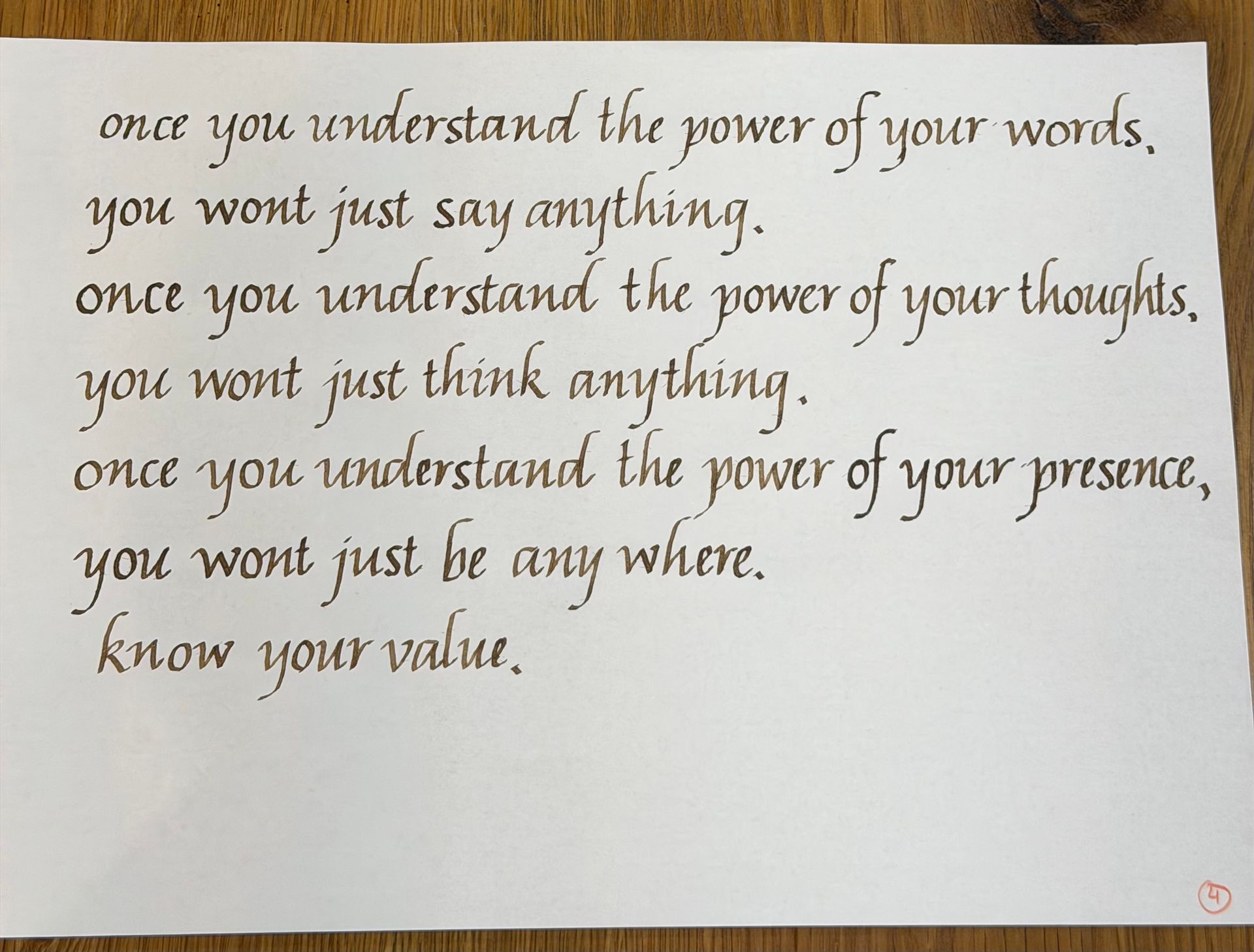
Project credit: Foundational Hand calligraphy by Nida Asad.
4. LEARNING & OBSERVATION
How has your ability to see and analyse letterforms improved over time?
My ability to analyse letterforms has surely improved over time. Now I am able to recognise the incorrectly constructed letterforms, as well as inconsistencies in counter spaces, letter and wors spacing.
What common mistakes do you now recognise in your own work that you didn’t notice before?
Initially my work looked beautiful to me, but now as I learn more about calligraphy I have started noticing imperfections that I would have easily overlooked before.
I can now identify inconsistencies in counter spaces, letterforms and spacing between letters and words. In short, I am more critical of my own work in a positive way!
How do exemplars or model alphabets support your learning right now?
Exemplars and model alphabets have been a great help to understand the basic construction of letters, and the variations have helped me to choose what may work best for me, as well as the overall composition.
These are a great visual references and inspiration as I continue to develop my skills.
What role does repetition play in your improvement at this stage?
Repetition works wonders for my practice. Each time I write and analyse, I am provided a chance to identify and improve my mistakes, making my work more refined and appealing with each attempt.

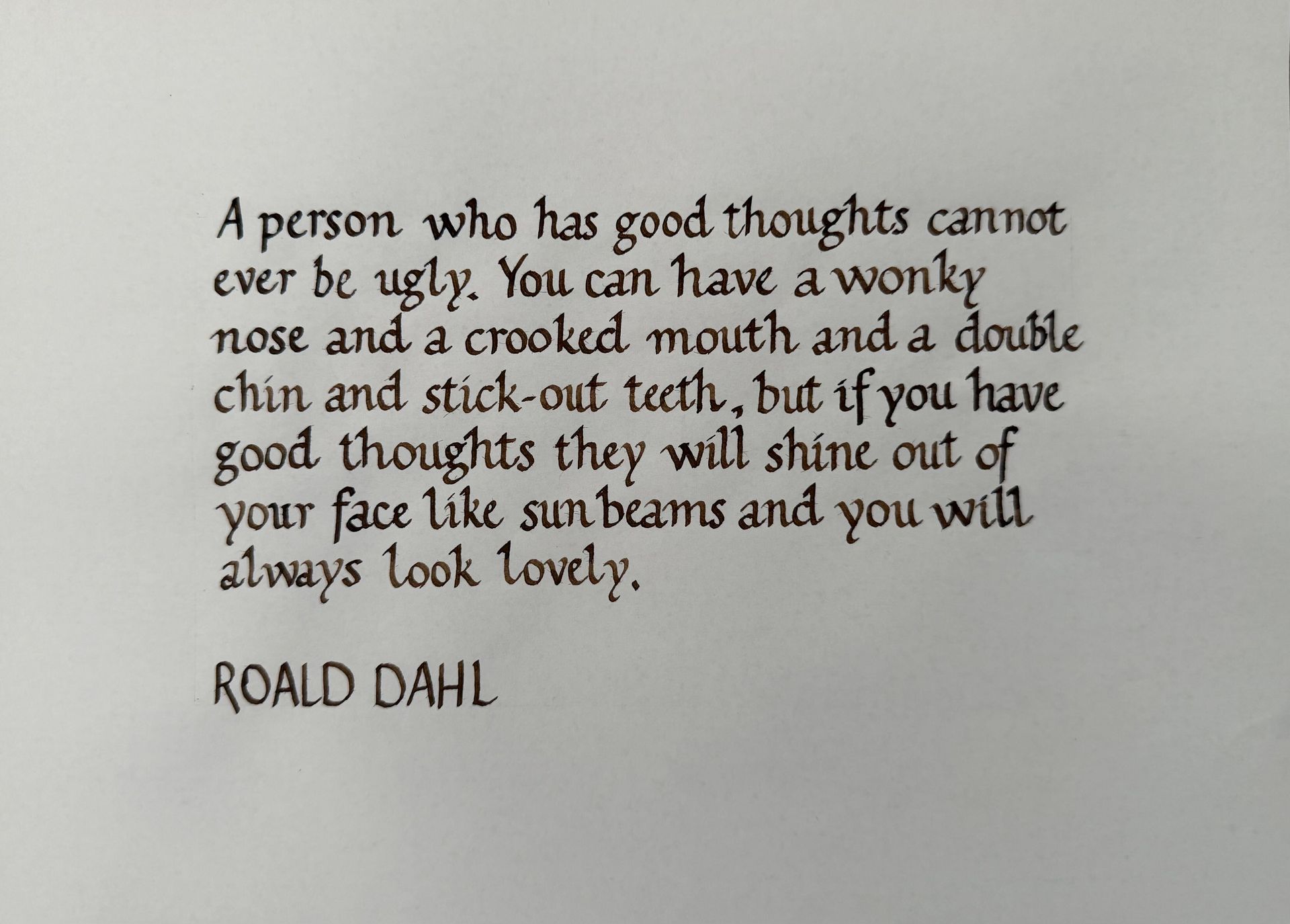
Project credit: Italic calligraphy by Nida Asad.
5. Developing Confidence & Voice
When do you feel most confident in your writing, and when does doubt appear?
I am most confident when I have been practicing regularly and have become familiar with my writing tool. Going without practice for extended periods of time bring doubts back and shakiness.
Are there early signs of personal preference or style emerging in your work?
I am drawn to the elegance and flow of
Copperplate, yet I find structured styles such as Blackletter easier to follow. With continued practice and time, I hope to develop my skills in both styles and eventually incorporate elements of each in my own writing.
How do you balance following rules with experimenting a little?
At the moment, my primary focus is on following the established rules and techniques of calligraphy. Later, when I am confident and competent in the fundamentals, I look forward to exploring my own creativity and developing a more personal approach to my writing.
What kind of calligraphy work feels just outside your comfort zone right now?
Copperplate flourishes!

Project credit: Foundational Hand calligraphy by Nida Asad.
6. FEEDBACK & COMMUNITY
How has receiving feedback influenced the way you practice calligraphy?
Positive feedbacks have encouraged me to keep going and practice more. Constructive feedback has helped me identify my mistakes and helped me improve with repeated attempts.
What type of feedback do you find most useful at this stage of learning?
All feedback that is specific, practical and encouraging is welcome!
Do you share your calligraphy work on social media?
This is yet to happen, hopefully in the near future :)
7. LOOKING ahead
What are your next goals in your calligraphy journey?
My aim is to practise regularly and become proficient in
Copperplate. Also I would like to try Arabic calligraphy and incorporate elements of both styles in my work.
Is there anything else you would like to add? News, updates, exciting projects ahead?
Currently, I have plenty of hard work and practice ahead of me. Most importantly, I have to enjoy the learning process, stay motivated and love what I do.
Where can people find your work online?” (website / socials)
I haven't got an online presence for calligraphy work just yet, but hopefully this is something I can work towards in near future!